 admin
adminMoving freight efficiently is not simply about finding an available truck. Businesses need to choose a shipping method that matches their freight volume, delivery requirements, handling needs, route, and budget.
For larger shipments, FTL freight is often one of the most practical options.
FTL stands for Full Truckload. It generally means a truck or trailer is dedicated to one shipper’s freight for a particular movement rather than combining that freight with shipments from multiple customers.
For manufacturers, distributors, construction companies, retailers, and other businesses shipping goods across Canada or between Canada and the United States, full truckload transportation can provide greater control over the shipment.
But FTL isn’t automatically the right choice for every load.
Understanding when to use it can help businesses avoid unnecessary handling, improve transportation planning, and choose a service that fits their actual shipping requirements.
What Is FTL Freight?
FTL freight, or Full Truckload freight, is a transportation method in which a trailer is dedicated to a single shipper’s load.
The shipment doesn’t necessarily need to physically fill every inch of the trailer. A business may choose FTL because of the freight’s weight, volume, value, handling requirements, delivery schedule, or need for dedicated trailer space.
This is an important distinction.
For example, a manufacturer may have a shipment that occupies only part of a trailer but contains sensitive equipment that shouldn’t be transferred between terminals. Using full truckload shipping may still make sense because the business gains a dedicated transportation setup.
FTL is commonly used for:
- Large palletized shipments
- Manufacturing materials
- Retail inventory
- Industrial products
- Construction materials
- Machinery and equipment
- High-value freight
- Time-sensitive shipments
- Long-distance commercial freight
The decision should ultimately depend on the characteristics of the shipment rather than pallet count alone.
FTL vs LTL: What’s the Difference?
One of the easiest ways to understand FTL is to compare it with LTL.
LTL means Less Than Truckload.
With LTL freight, several shippers may share trailer capacity. A carrier can collect freight from different customers and consolidate it within its transportation network.
FTL operates differently.
With FTL freight, the trailer is dedicated to one shipper’s load for that movement.
This difference affects how freight travels through the transportation process.
LTL can be a practical choice when a business has a relatively small shipment and doesn’t need an entire trailer. It allows the shipper to pay for only a portion of the available capacity.
FTL becomes more attractive as shipment size increases or when handling, transit time, scheduling, and dedicated capacity become more important.
Neither option is universally better. The right choice depends on the shipment.
When Does FTL Freight Make Sense?
There isn’t one rule that determines when a shipment should move as a full truckload.
Several factors should be considered together.
1. You Have a Large Volume of Freight
The most obvious reason to choose FTL freight is shipment size.
If your business regularly moves a substantial number of pallets, large quantities of products, or freight that takes up most of a trailer, booking dedicated capacity can be more practical than splitting the load into smaller shipments.
This is common for manufacturers moving finished products to distribution centres, wholesalers replenishing inventory, and businesses transferring goods between facilities.
As freight volume grows, businesses should compare the overall transportation requirements rather than automatically assuming that several smaller shipments will be more economical.
A truck transport company can review the freight dimensions, weight, route, and delivery requirements to determine whether FTL is suitable.
2. Your Shipment Is Time-Sensitive
Delivery timing can be just as important as shipment size.
A business may need inventory before a scheduled promotion, raw materials to keep production moving, equipment for a project, or products delivered within a specific receiving window.
In these situations, full truckload freight can offer operational advantages.
Because the trailer is dedicated to one shipper’s freight, the transportation process can be more direct than a network that involves multiple freight transfers and terminal movements.
That doesn’t mean every FTL shipment is guaranteed to arrive faster. Weather, traffic, road conditions, border processing, and other factors can still affect transportation.
However, dedicated truckload transportation can reduce some of the additional handling and routing involved in consolidated freight networks.
For time-sensitive commercial shipments, that can make FTL worth considering.
3. You Want to Reduce Freight Handling
Every time freight is handled, there is another operational step in the journey.
Depending on the service and network, LTL shipments may move through terminals where freight is unloaded, sorted, consolidated, and reloaded.
For many products, this is completely normal and manageable.
But certain shipments benefit from less handling.
Fragile products, expensive equipment, sensitive materials, custom-manufactured goods, or unusually packaged freight may be better suited to a transportation method that reduces unnecessary transfers.
With FTL shipping, freight can often remain on the same trailer from pickup until delivery.
Proper packaging and securement are still essential, but reducing the number of freight transfers can simplify the transportation process.
4. Your Freight Is High Value
High-value freight requires careful transportation planning.
The value isn’t always obvious from the size of the shipment. A relatively compact piece of industrial equipment, specialized machinery, electronics, or manufactured components may represent a significant investment.
Businesses moving valuable freight may prefer dedicated truckload capacity because it provides greater control over how the shipment moves.
Before booking, provide the carrier with accurate information about the commodity, value, dimensions, weight, packaging, and special handling requirements.
The carrier can then determine what equipment and transportation approach are appropriate.
For valuable shipments, selecting a reliable trucking company based on experience and capabilities is more important than simply choosing the lowest available rate.
5. You Have a Strict Pickup or Delivery Schedule
Many commercial facilities don’t accept freight at any time of day.
Warehouses may require appointments. Distribution centres can have scheduled receiving windows. Construction sites may need materials to arrive at a particular stage of the project. Manufacturing facilities may coordinate deliveries with production schedules.
Missing these windows can create operational problems.
FTL freight can be useful when a shipment requires more controlled pickup and delivery planning.
Since the truck is assigned to one shipment, the carrier can plan transportation around the agreed schedule without coordinating that trailer space with multiple customers’ freight.
Businesses should still provide realistic pickup and delivery requirements. The earlier those requirements are communicated, the easier it is to build an appropriate transportation plan.
6. Your Shipment Is Travelling a Long Distance
Full truckload transportation is commonly used for long-distance freight.
Consider a business shipping commercial freight from Edmonton to another major Canadian market or moving products between Canada and the United States.
For a large shipment, dedicated truckload transportation may provide a simpler route from origin to destination.
Long-distance freight planning should consider:
- Origin and destination
- Shipment dimensions
- Total weight
- Commodity
- Trailer requirements
- Pickup availability
- Delivery requirements
- Border requirements where applicable
- Special handling needs
A carrier with long-haul and cross-border experience can help businesses understand which service best fits the shipment.
7. You Need Cross-Border Freight Transportation
Canada-US trade creates a significant need for reliable commercial transportation.
Businesses regularly move manufactured products, machinery, raw materials, consumer goods, industrial freight, and other cargo across the border.
For larger shipments, FTL freight can provide a dedicated transportation option for cross-border movements.
However, cross-border shipping requires more than putting freight on a truck. Commercial shipments may involve customs documentation, carrier requirements, broker coordination, and other border-related processes. Accurate documentation is important because errors or missing information can contribute to delays.
Businesses that regularly ship between Canada and the United States should consider working with a truck transport company experienced in cross-border freight rather than treating border transportation exactly like a domestic shipment.
8. Your Freight Requires Specific Trailer Equipment
FTL doesn’t mean every shipment travels in the same type of trailer.
Different freight requires different equipment.
Dry vans are commonly used for packaged and palletized products that need an enclosed environment.
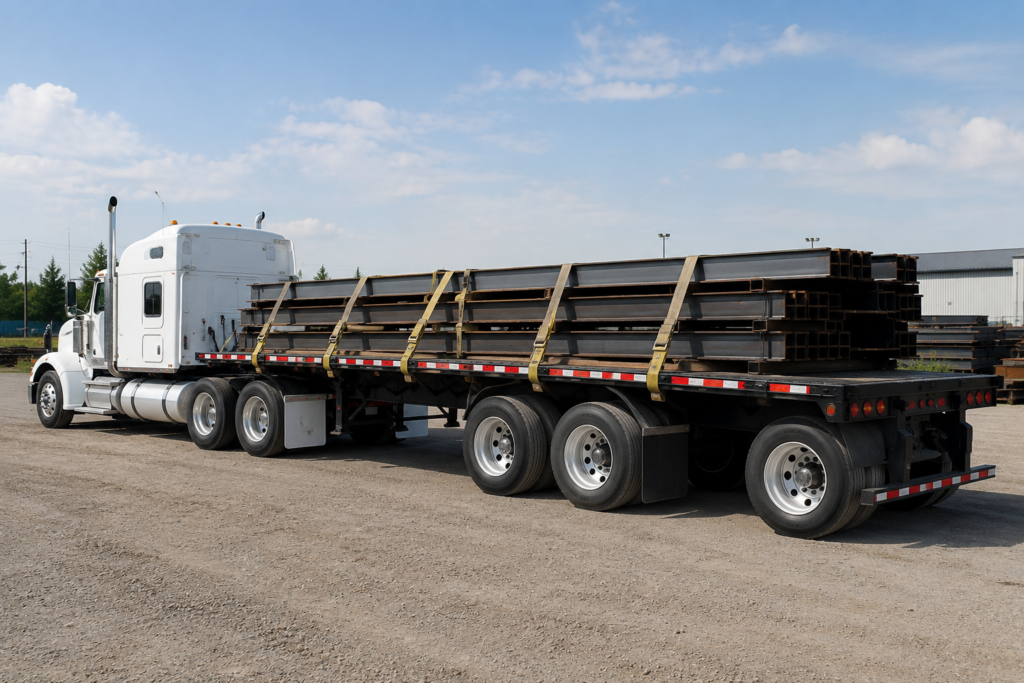
Flatbed trailers can be used for freight requiring side or overhead loading, including certain construction materials, steel, machinery, and industrial products.
Conestoga trailers combine flexible loading access with a retractable covering system that can protect appropriate freight from exposure.
Temperature-controlled equipment may be required for products that need specific environmental conditions during transportation.
A professional FTL freight company should evaluate the cargo before assigning equipment.
The dimensions, weight, loading method, weather sensitivity, and delivery environment can all influence trailer selection.
How FTL Freight Supports Edmonton Businesses
Edmonton is an important transportation and industrial centre in Western Canada.
Businesses across manufacturing, construction, energy, distribution, retail, agriculture, and other industries depend on road transportation to move products and materials between facilities, cities, provinces, and international markets.
For companies searching for trucking companies Edmonton, it is important to consider whether a carrier can support the type of freight the business actually moves.
A company shipping occasional small loads may have very different requirements from a manufacturer regularly moving truckload quantities.
Similarly, a construction business moving large materials may require different equipment from a distributor shipping palletized inventory.
Lubana Trucking supports commercial freight transportation from Edmonton to destinations across Canada and the United States, including full truckload, flatbed, specialized, and cross-border transportation requirements.
Is FTL Always More Expensive Than LTL?
Not necessarily.
Looking only at the initial freight quote can give an incomplete picture.
LTL is often economical for smaller shipments because businesses share trailer capacity. Paying for an entire truck when you only have a few standard pallets may not make financial sense.
As shipment volume increases, however, the comparison can change.
Businesses should evaluate the complete transportation requirement, including shipment size, distance, handling, delivery schedule, equipment, and operational impact.
Suppose a company has enough freight that it would otherwise require several LTL shipments. Comparing those combined costs with a single full truckload freight movement may reveal a different result.
The goal shouldn’t simply be finding the cheapest shipping method.
It should be finding the transportation option that provides the best balance between cost, service requirements, freight protection, and delivery needs.
Information to Prepare Before Requesting an FTL Quote
Providing accurate information helps a carrier plan your shipment correctly.
Before requesting an FTL freight quote, businesses should have the following details available:
- Pickup location
- Delivery location
- Commodity being shipped
- Number of pallets or pieces
- Freight dimensions
- Total shipment weight
- Preferred pickup date
- Required delivery date or receiving window
- Loading and unloading method
- Trailer requirements
- Special handling instructions
- Cross-border information, if applicable
Don’t estimate critical measurements if accurate information is available.
Incorrect dimensions or weight can affect equipment selection and transportation planning.
If your freight has an unusual shape, uneven weight distribution, weather sensitivity, or specific loading requirement, mention it during the initial conversation with the carrier.
How to Choose an FTL Freight Company
Price matters, but it shouldn’t be the only factor used to select a transportation provider.
Businesses should also consider the carrier’s experience, equipment, service coverage, communication, safety practices, and ability to handle the specific freight being shipped.
For long-distance and cross-border transportation, network coverage also becomes important.
Ask whether the company regularly handles your type of freight and whether it operates in the markets you need to reach.
Clear communication is another important indicator.
A carrier should ask questions about your shipment rather than providing a transportation plan without understanding the freight.
The right FTL freight company should know what is moving, where it is going, how much it weighs, how it will be loaded, and whether there are special requirements before dispatch.
FTL Freight Can Be More Than Just a Full Trailer
The biggest misconception about FTL is that the trailer must always be completely full.
In reality, businesses choose FTL freight for many reasons beyond volume.
A shipment may need dedicated space because it is valuable. It may need reduced handling because it is sensitive. It may have a strict delivery schedule. It may require specialized equipment or simply be operationally easier to move as one dedicated shipment.
This is why freight decisions should be based on the complete shipping requirement rather than a single factor.
For some loads, LTL is the practical choice.
For others, dedicated truckload transportation provides the control and flexibility the business needs.
Plan Your Next Full Truckload Shipment With Lubana Trucking
Choosing between FTL and other transportation options becomes easier when you understand the shipment itself.
Consider how much freight you have, how quickly it needs to arrive, whether handling should be minimized, what equipment is required, and whether the shipment will cross the Canada-US border.
For businesses in Edmonton and other markets across North America, working with an experienced transportation provider can help simplify these decisions.
Lubana Trucking provides FTL freight and commercial transportation services for businesses moving goods across Canada and the United States. Whether you’re shipping palletized products, industrial materials, machinery, construction freight, or other commercial cargo, the first step is providing accurate shipment details so the right transportation plan can be developed.
If you’re planning an upcoming full truckload shipment, contact Lubana Trucking to discuss your freight requirements and request a quote.