 admin
adminThe freight transportation industry uses different types of trailers to move cargo safely and efficiently. One of the most versatile options used today is the Conestoga trailer. This trailer combines the flexibility of a flatbed with the protection of a covered trailer, making it a preferred solution for many industries.
Businesses that ship construction materials, machinery, or sensitive freight often choose Conestoga trailer transport because it protects cargo from the elements while allowing easy loading from the sides or top. For trucking companies and shippers, this type of trailer helps balance safety, efficiency, and convenience.
At Lubana Trucking, specialized trailers, such as Conestoga equipment, play an important role in safely moving freight across Canada and the United States. Understanding how these trailers work can help businesses choose the right freight solution for their shipping needs.
In this guide, we explain everything you need to know about Conestoga trailers, including how they work, why they are widely used in freight transport, and the industries that rely on them.
What Is a Conestoga Trailer?
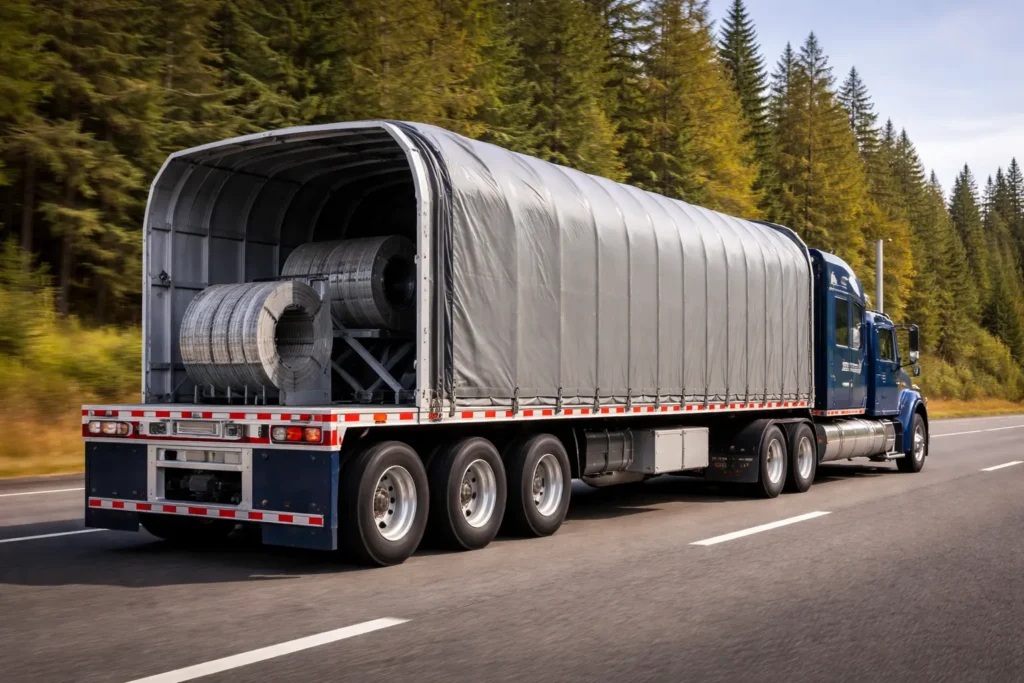
A Conestoga trailer is a type of flatbed trailer equipped with a rolling tarp system mounted on a frame. The tarp can slide along the trailer rails to cover or uncover the cargo area.
This design allows the trailer to provide full weather protection while still maintaining the loading flexibility of a flatbed trailer.
Unlike traditional flatbeds that require manual tarping, a Conestoga trailer uses a built-in tarp system that can easily be opened or closed by the driver.
Key Features of a Conestoga Trailer
A Conestoga trailer includes several important features that make it highly useful for freight transport.
- Rolling tarp system that slides along the trailer
- An aluminum frame that supports the tarp structure
- Protection from rain, snow, and dust
- Side, rear, and top loading capability
- Secure cargo coverage during transportation
Because of these features, the trailer is often used for freight that needs protection but cannot fit inside a standard dry van trailer.
How a Conestoga Trailer Works
The most unique part of a Conestoga trailer is its sliding tarp system. This system runs on tracks installed along the length of the trailer.
When the tarp is moved forward or backward, the cargo area opens completely, allowing equipment like forklifts or cranes to load freight from multiple angles.
Typical Loading Process
The loading process with a Conestoga trailer is simple and efficient.
- The driver slides the tarp toward the front or rear of the trailer
- The cargo area becomes fully open
- Freight is loaded using forklifts or cranes
- The tarp is pulled back over the cargo
- Straps or chains are used to secure the freight
This process is much faster compared to manual tarping on traditional flatbed trailers.
The design also improves driver safety because drivers do not need to climb onto the load to secure tarps.
Why Conestoga Trailers Are Used in Freight Transport
Many shippers prefer Conestoga trailer transport because it offers the benefits of both enclosed and open trailers.
1. Protection From Weather
Freight transported on open flatbeds can be exposed to rain, snow, or debris. This exposure may damage materials such as steel, machinery, or building products.
The Conestoga tarp system protects cargo from these environmental conditions while still allowing flexible loading options.
2. Faster Loading and Unloading
Traditional flatbed loads require manual tarping. This process can take significant time and effort.
With a Conestoga trailer:
- The tarp slides open quickly
- Freight can be loaded immediately
- Drivers save time during operations
This helps improve efficiency in freight transport.
3. Flexible Loading Options
A Conestoga trailer allows freight to be loaded from several directions.
Cargo can be loaded:
- From the side using forklifts
- From the top using cranes
- From the rear, like a traditional trailer
This flexibility makes the trailer useful for oversized or irregular cargo.
4. Improved Freight Security
The sliding tarp system covers cargo completely. This helps protect valuable shipments from dirt, debris, and outside visibility.
Many shippers prefer this option when transporting high-value freight.
Industries That Use Conestoga Trailers
Many industries rely on Conestoga trailer transport services for safe and reliable delivery.
Construction Industry
Construction companies ship large amounts of building materials between suppliers, warehouses, and job sites.
Common construction freight includes:
- Lumber
- Steel beams
- Pipes
- Roofing materials
- Structural components
These materials often need protection from the weather, making Conestoga trailers an excellent option.
Manufacturing Industry
Manufacturing facilities regularly transport heavy equipment and metal components.
Examples of freight transported include:
- Industrial machines
- Steel products
- Equipment parts
- Fabricated metal components
Because this cargo is often large or irregular in shape, flatbed-style loading is required.
Many manufacturers also rely on professional Flatbed Hauling Services to move oversized materials safely between production facilities and distribution centers.
Energy and Oil Industry
Energy and oil companies transport large industrial equipment between drilling sites and processing plants.
Common cargo includes:
- Large pipes
- Heavy machinery
- Steel components
- Industrial equipment
Conestoga trailers help protect these materials during long-distance freight transportation.
Automotive Industry
The automotive sector also uses Conestoga trailers to move parts and equipment.
Automotive manufacturers often ship:
- Engine components
- Large vehicle parts
- Manufacturing equipment
- Production materials
Weather protection is critical to prevent rust or damage during transport.
Conestoga Trailer vs Flatbed Trailer
Businesses often compare Conestoga trailers with traditional flatbed trailers when choosing the best shipping method.
Here is a simple comparison.
| Feature | Conestoga Trailer | Flatbed Trailer |
| Weather protection | Yes | No |
| Loading flexibility | High | High |
| Manual tarping | Not required | Required |
| Freight protection | High | Low |
While flatbed trailers are widely used, the added protection of a Conestoga trailer makes it a better choice for many shipments.
Companies that frequently transport oversized equipment may also rely on specialized Heavy Haul Trucking Services to move extremely large loads safely across long distances.
Advantages of Conestoga Trailer Transport
There are several reasons why businesses choose this type of trailer for freight shipping.
Better Freight Protection
The tarp system shields cargo from rain, snow, and dust during transportation. This protection reduces the risk of cargo damage.
Improved Efficiency
Drivers do not need to manually cover freight with tarps. The sliding system saves time during loading and unloading operations.
Increased Driver Safety
Manual tarping can be dangerous because drivers may need to climb on top of cargo. With Conestoga trailers, the tarp system eliminates this risk.
Versatile Cargo Handling
Conestoga trailers can transport many types of cargo, including materials that require flatbed-style loading but still need protection.
Common Freight Transported by Conestoga Trailers
These trailers are used to transport a wide range of cargo.
Common examples include:
- Steel coils and metal sheets
- Lumber and wood products
- Industrial machinery
- Construction materials
- Large manufacturing equipment
Because the trailer can open completely, it allows loading equipment to access the cargo area easily.
This makes it suitable for industries that handle heavy or oversized shipments.
Dimensions and Capacity of Conestoga Trailers
Most Conestoga trailers follow the same general dimensions as standard flatbed trailers.
Typical specifications include:
- Length between 48 and 53 feet
- Width around 8.5 feet
- Maximum cargo weight up to 45,000 pounds
These specifications may vary depending on equipment design and transportation regulations.
When Businesses Should Use a Conestoga Trailer
A Conestoga trailer is the best option when freight requires both protection and flexible loading.
Businesses should consider this trailer when cargo needs:
- Protection from the weather
- Side or top loading access
- Transportation of large materials
- Flexible freight handling
Companies shipping high-value equipment or sensitive materials often prefer this option because it combines safety and efficiency.
In some cases, businesses may also work with Freight Brokerage Services to connect with carriers that offer specialized equipment like Conestoga trailers.
Freight brokers help coordinate shipments and ensure cargo is transported using the right equipment.
Why Businesses Choose Lubana Trucking
Reliable transportation is essential for businesses that depend on timely freight delivery. Choosing an experienced carrier ensures that cargo arrives safely and on schedule.
Lubana Trucking provides professional freight transportation solutions designed to meet the needs of modern supply chains.
Our services support a wide range of freight types, including:
- Flatbed hauling
- Conestoga trailer transport
- Heavy haul trucking
- Cross-border freight services
With experienced drivers and modern equipment, Lubana Trucking helps businesses move freight safely across North America.
Conclusion
The Conestoga trailer has become an important part of modern freight transportation. It offers the flexibility of a flatbed trailer while protecting an enclosed system.
This combination makes it ideal for transporting construction materials, machinery, and industrial freight that must stay protected during transit.
By reducing manual tarping, improving loading efficiency, and protecting valuable cargo, Conestoga trailers help businesses move freight more safely and efficiently.
For companies that need reliable freight transportation, working with experienced carriers like Lubana Trucking ensures that cargo is handled with care and delivered on time.
Whether shipping construction materials, machinery, or specialized freight, the right equipment makes all the difference in successful freight transport.
Frequently Asked Questions
A Conestoga trailer is used to transport freight that requires weather protection but still requires the loading flexibility of a flatbed trailer. It is commonly used for shipping steel, lumber, machinery, and construction materials. The sliding tarp system protects cargo while allowing quick side or top loading.
The main difference is cargo protection. A flatbed trailer is completely open, while a Conestoga trailer has a rolling tarp system that covers the freight. This tarp protects cargo from rain, snow, and debris during transportation while still allowing flexible loading.
Most Conestoga trailers can carry up to 45,000 pounds of freight, depending on the trailer design and legal weight limits. These trailers usually have a length of 48 to 53 feet, similar to standard flatbed trailers used in freight transport.
Several industries rely on Conestoga trailer transport services for cargo protection and easy loading.
Common industries include:
Construction
Manufacturing
Oil and energy
Automotive
Steel and metal production
These industries often ship large materials that cannot fit inside enclosed trailers.
Businesses should use a Conestoga trailer when freight needs protection from weather but still requires flatbed-style loading. It is ideal for oversized cargo, machinery, and construction materials that must remain covered during transport.
Many companies choose this trailer when working with experienced carriers like Lubana Trucking to ensure safe and efficient freight delivery.