 admin
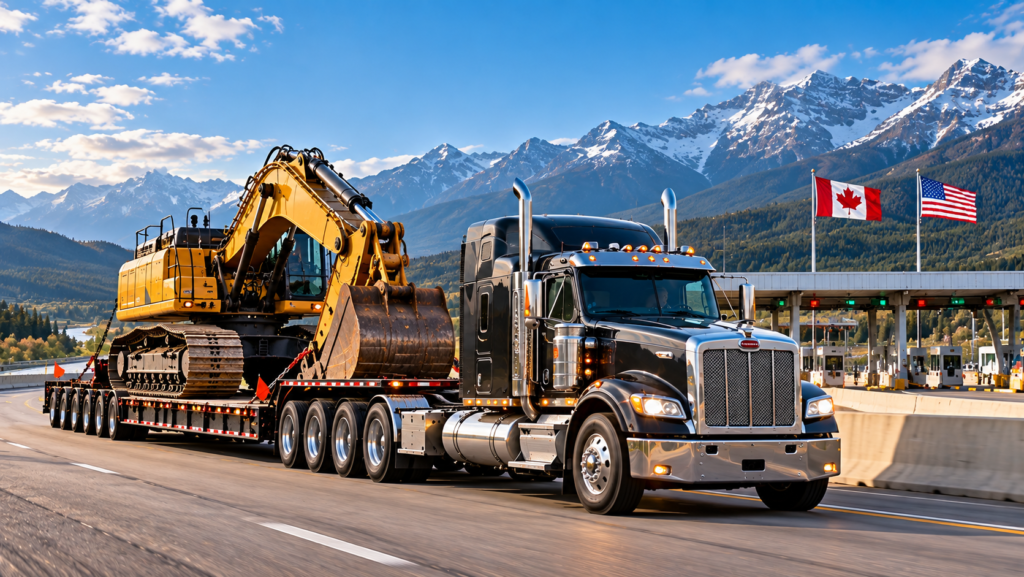
adminTransporting oversized equipment from Alberta to the United States requires much more than booking a truck. Large machinery, industrial equipment, construction assets, agricultural machines, and oilfield equipment often exceed standard transportation dimensions, making specialized planning essential. Businesses moving oversized freight across the Canada-US border need experienced carriers that understand heavy haul transportation, route planning, permits, customs requirements, and equipment selection.
Many companies searching for “Who can haul oversized equipment from Alberta to the US?” are looking for a transportation partner capable of handling complex shipments safely and efficiently. The right carrier will have the experience, specialized trailers, and cross-border expertise required to move oversized freight without unnecessary delays.
This guide explains what qualifies as oversized equipment, how cross-border transportation works, and what businesses should consider when choosing a heavy haul carrier.
What Is Considered Oversized Equipment?
Equipment That Exceeds Standard Dimensions
Oversized equipment refers to freight that exceeds legal transportation limits for width, height, length, or weight. These shipments often require special permits, designated routes, and specialized trailers.
Common oversized equipment includes:
- Excavators
- Bulldozers
- Cranes
- Agricultural machinery
- Mining equipment
- Oilfield equipment
- Industrial generators
- Manufacturing machinery
- Construction equipment
The transportation requirements depend on both the size and weight of the shipment.
Why Oversized Freight Requires Specialized Transportation
Unlike standard freight, oversized equipment cannot always travel on regular transportation routes without additional planning. Carriers must evaluate road restrictions, bridge clearances, permit requirements, and escort vehicle needs before transportation begins.
Proper planning helps ensure the equipment reaches its destination safely and efficiently.
What Type of Carrier Can Haul Oversized Equipment?
Heavy Haul Carriers
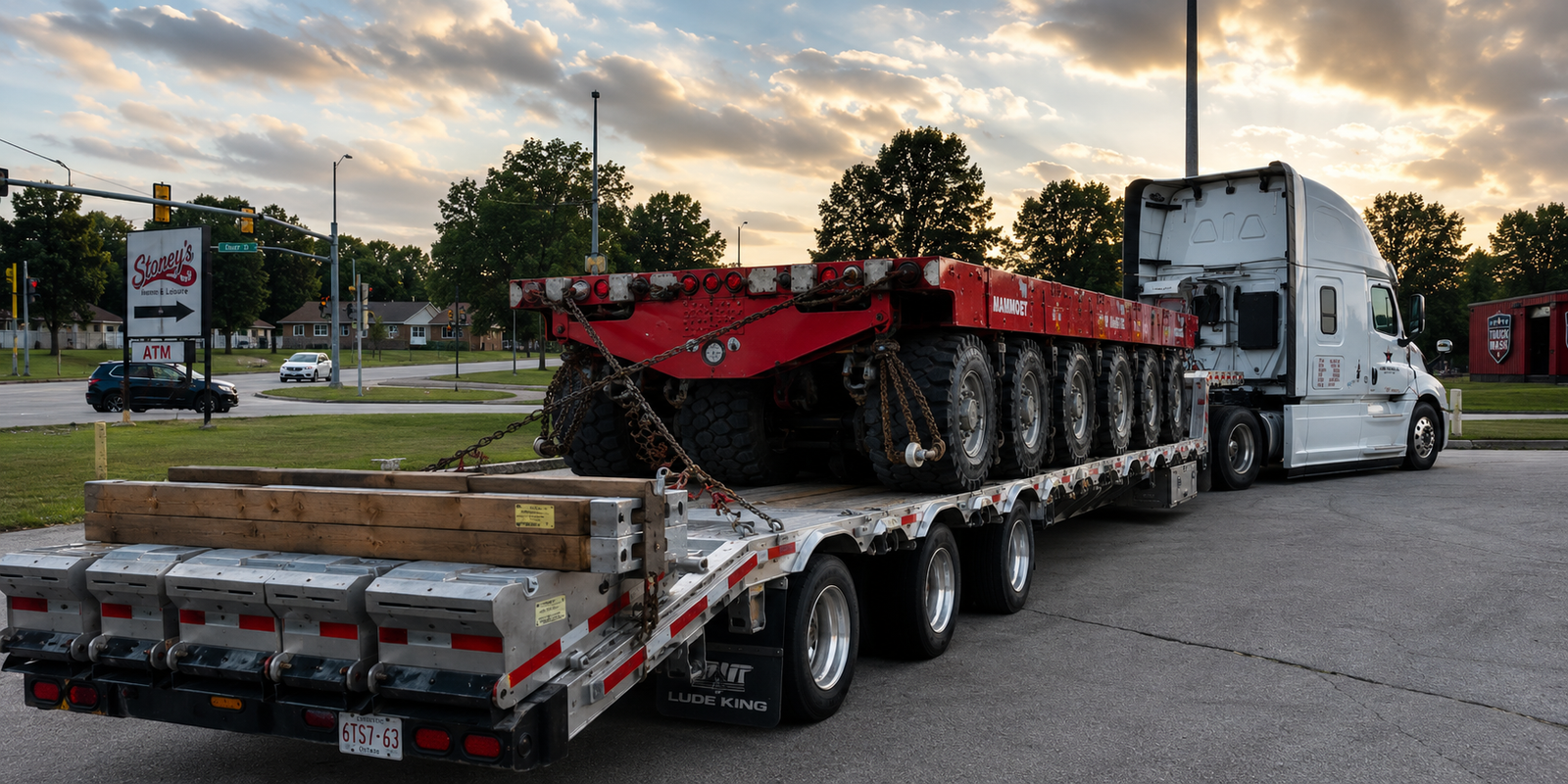
Heavy haul carriers specialize in transporting large and oversized freight. These transportation providers use specialized trailers and equipment designed to support complex shipments.
Heavy haul transportation is commonly used for industrial projects, infrastructure development, manufacturing operations, and energy sector transportation.
Flatbed Transportation Providers
Flatbed trailers are frequently used for oversized equipment that can be loaded from the side or top. Their open design provides flexibility for large freight that cannot fit inside enclosed trailers.
Many businesses choose flatbed transportation for equipment that exceeds the dimensions of standard trailers.
Step Deck Carriers
Step deck trailers provide additional height clearance by lowering the trailer deck closer to the ground. This makes them ideal for transporting taller equipment while maintaining compliance with transportation regulations.
Step deck transportation is often used for machinery, construction equipment, and industrial components.
Specialized Lowboy Trailers
Lowboy trailers are designed specifically for large and heavy equipment. Their lower deck height allows carriers to transport tall machinery while maintaining safe transportation standards.
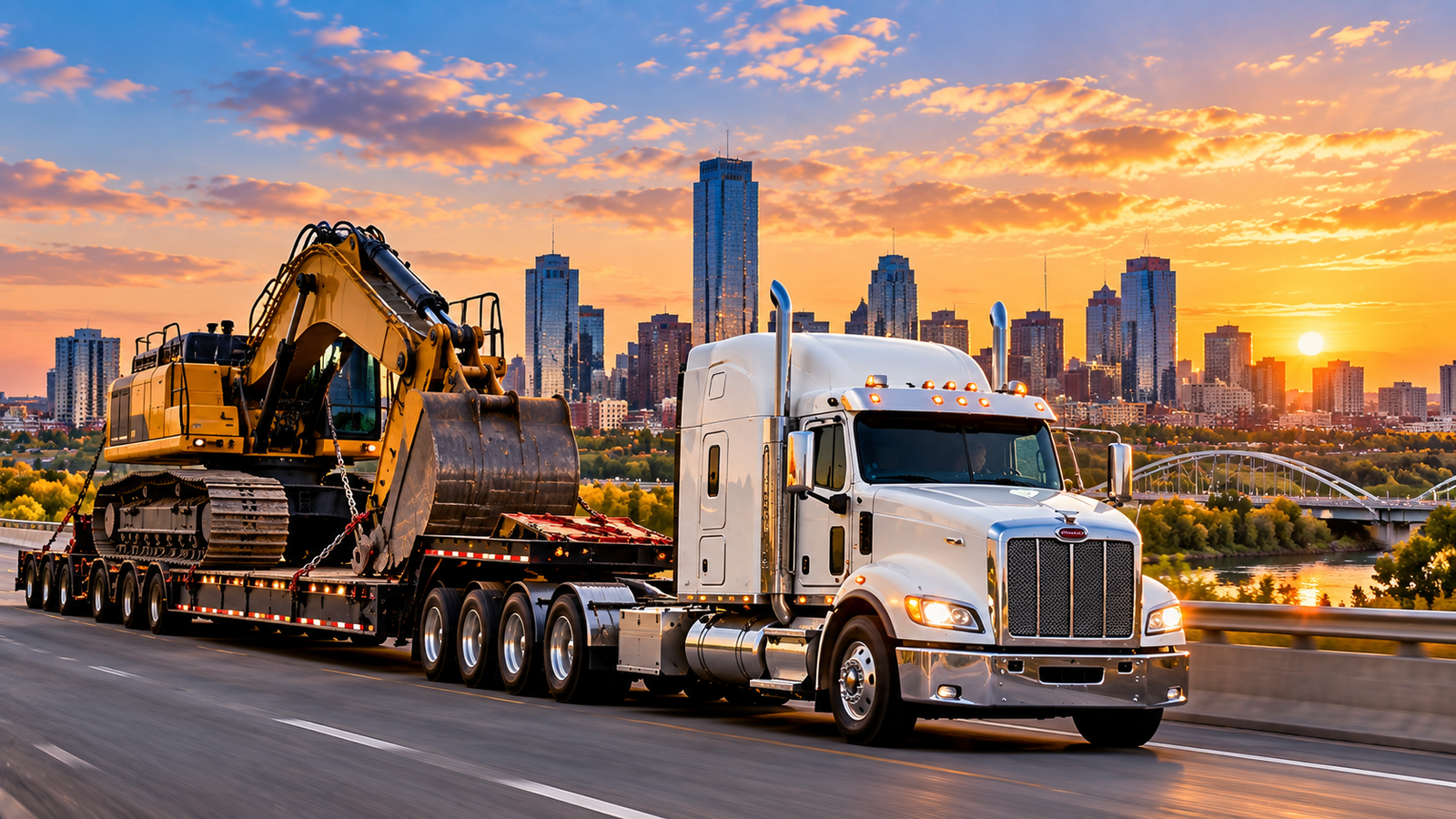
Lowboy trailers are commonly used for excavators, bulldozers, cranes, and heavy construction equipment.
How Cross-Border Transportation Works
Customs Documentation
Moving oversized equipment from Alberta to the United States requires accurate customs documentation. Carriers must ensure all paperwork is prepared correctly before the shipment reaches the border.
Proper documentation helps reduce delays and supports smooth border processing.
Route Planning
Cross-border heavy haul transportation requires detailed route planning. Carriers evaluate highways, bridges, construction zones, and transportation restrictions to determine the safest route.
Route planning becomes even more important when oversized dimensions are involved.
Permit Coordination
Oversized shipments often require permits in multiple jurisdictions. Transportation providers coordinate permits to ensure compliance throughout the journey.
Permit requirements vary depending on equipment size, weight, and destination.
Border Compliance
Experienced carriers understand the regulatory requirements involved in transporting oversized freight between Canada and the United States. Their knowledge helps businesses navigate complex transportation requirements while minimizing operational challenges.
Industries That Frequently Move Oversized Equipment
Construction Industry
Construction companies regularly transport excavators, loaders, cranes, and other large machinery between project locations.
Reliable transportation helps keep projects on schedule and supports efficient job site operations.
Oil and Gas Industry
Alberta’s energy sector depends on heavy haul transportation to move equipment between facilities, drilling locations, and industrial sites.
Oversized transportation plays an important role in supporting ongoing operations.
Agriculture Industry
Agricultural businesses often transport tractors, combines, and specialized equipment across provinces and international borders.
These shipments frequently require specialized transportation planning.
Manufacturing Industry
Manufacturers may need to transport production equipment, industrial machinery, and oversized components to facilities throughout North America.
Heavy haul carriers help ensure safe and efficient equipment movement.
What to Look for in an Oversized Equipment Carrier
Heavy Haul Experience
Experience matters when transporting oversized equipment. Carriers that regularly handle heavy haul shipments understand permit requirements, route planning, and equipment securement procedures.
Cross-Border Expertise
Not every trucking company has experience transporting oversized freight between Canada and the United States. Businesses should choose carriers familiar with customs procedures and international transportation regulations.
Specialized Equipment
The right carrier should have access to flatbeds, step decks, lowboys, and other specialized trailers suitable for oversized freight.
Safety and Compliance
Transportation providers should follow industry regulations and maintain strong safety practices throughout the transportation process.
Common Questions Businesses Ask
Who can haul oversized equipment from Alberta to the US?
Heavy haul carriers with cross-border transportation experience are typically the best choice for moving oversized equipment between Alberta and the United States.
What trailer is used for oversized equipment?
The trailer depends on the equipment dimensions and weight. Common options include flatbeds, step decks, and lowboy trailers.
Do oversized loads need permits?
Yes. Many oversized shipments require permits based on their dimensions, weight, and transportation route.
Can construction equipment be shipped from Alberta to the US?
Yes. Excavators, bulldozers, cranes, and other construction equipment are commonly transported across the Canada-US border using specialized heavy haul transportation.
How long does cross-border heavy haul transportation take?
Transit times vary depending on route requirements, permit approvals, customs processing, weather conditions, and shipment complexity.
Conclusion
If you need to haul oversized equipment from Alberta to the US, choosing the right transportation partner is critical. Heavy haul transportation requires specialized equipment, route planning, permit coordination, customs expertise, and industry experience. Working with an experienced carrier helps ensure oversized freight moves safely, efficiently, and in compliance with transportation regulations.
Whether you need flatbed transportation, lowboy trailers, step deck services, or cross-border heavy haul support, Lubana Trucking provides professional transportation solutions for oversized equipment across Canada and the United States.