 admin
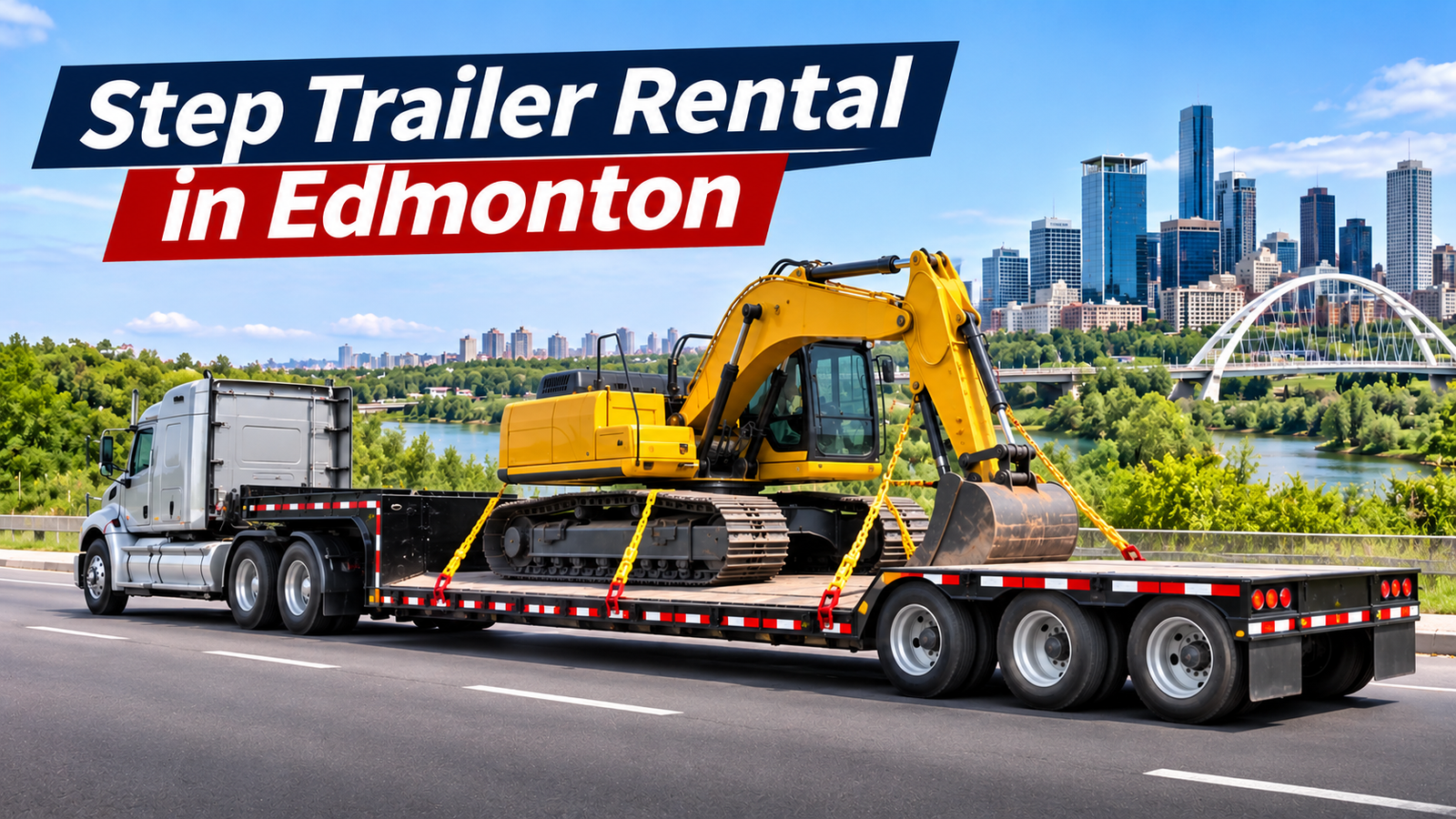
Transporting heavy machinery, construction equipment and oversized industrial cargo requires the right trailer configuration. Standard flatbeds and step deck trailers work for many commercial shipments, but certain equipment requires a lower loading platform and a more specialized transportation arrangement. This is where a removable gooseneck trailer, commonly known as an RGN trailer, becomes useful.
Businesses searching for RGN Rental in Edmonton often need to understand how these trailers work, what types of equipment they carry, how the loading process differs from other trailer types and what to consider before arranging a rental.
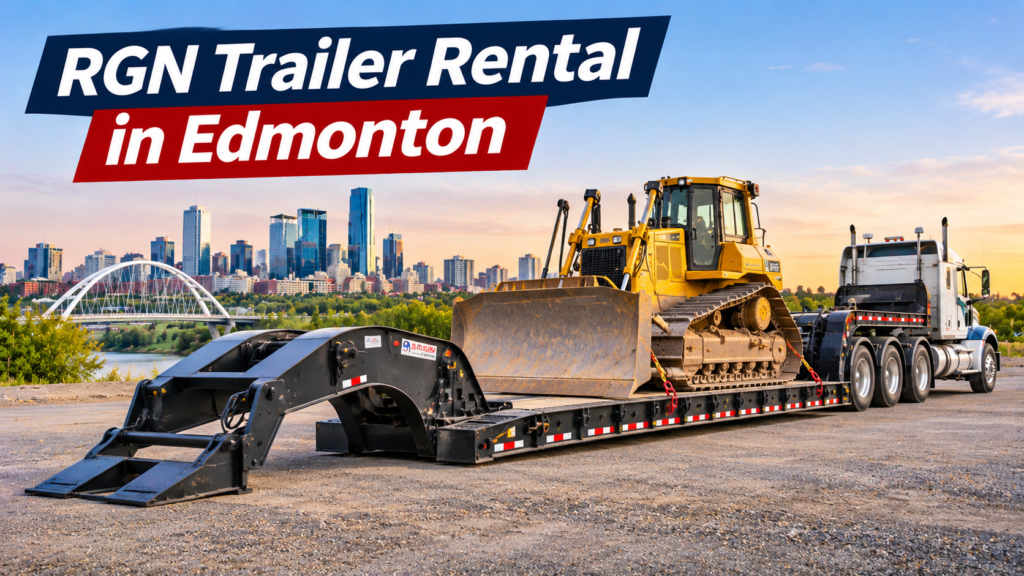
An RGN trailer is designed with a detachable front section that allows the main deck to lower towards the ground. This creates a front-loading arrangement for suitable self-propelled machinery, including excavators, bulldozers and other heavy equipment.
For construction companies, industrial operators, equipment dealers and heavy haul transportation businesses, understanding RGN trailer specifications is important before choosing equipment for a shipment.
This guide covers the design, applications, loading process, rental cost factors, trailer comparisons and transportation requirements associated with RGN trailers in Edmonton and across Alberta.
What Is an RGN Trailer?
RGN stands for Removable Gooseneck. An RGN trailer is a specialized lowboy trailer with a detachable front section that connects the trailer to the truck tractor.
The removable gooseneck is the main feature that separates an RGN trailer from conventional flatbed and step deck trailers.
When the gooseneck is detached, the front of the trailer deck can be lowered to create a loading ramp. Suitable wheeled or tracked machinery can then be driven onto the trailer from the front, depending on the equipment and loading arrangement.
After loading, the gooseneck is reconnected and secured according to the trailer manufacturer’s operating instructions.
RGN trailers are commonly used in heavy haul transportation because their low deck design and loading configuration support the movement of certain large and heavy machines.
What Does Removable Gooseneck Mean?
The gooseneck is the front connection section of the trailer that attaches to the tractor.
In an RGN configuration, this section is designed to detach from the main deck. Depending on the trailer model, the system might use hydraulic or mechanical components.
Once detached, the front of the trailer can be lowered towards the ground. This allows compatible equipment to move onto the main deck without needing to climb a conventional trailer ramp.
The loading arrangement is particularly useful for machinery with tracks or wheels that can drive onto the trailer under suitable operating conditions.
RGN trailers are also known as detachable gooseneck trailers or RGN lowboy trailers.
How Does an RGN Trailer Work?
The removable gooseneck system allows the trailer to create a lower front-loading point. Although the exact operating process varies by manufacturer and trailer design, the general loading sequence involves several stages.
Step 1: Position the Trailer on Suitable Ground
The trailer must be positioned on firm, level ground with enough space for the loading operation.
The ground conditions are important because the trailer deck and detachable gooseneck must remain stable during the process.
Step 2: Detach the Gooseneck
The operator follows the manufacturer’s instructions to disconnect the gooseneck from the main deck.
Hydraulic or mechanical components are used depending on the trailer configuration.
Step 3: Lower the Main Deck
After the gooseneck is detached, the front of the trailer deck is lowered to create a suitable loading approach.
This arrangement reduces the need for heavy machinery to climb a steep rear loading ramp.
Step 4: Load the Equipment
Compatible machinery is driven or otherwise moved onto the trailer using the approved loading procedure.
The equipment must be positioned carefully to maintain appropriate weight distribution.
Step 5: Reconnect and Secure the Gooseneck
Once the equipment is correctly positioned, the gooseneck is reattached and secured according to the manufacturer’s instructions.
All relevant locking mechanisms, connections and safety components must be checked before the trailer moves.
Step 6: Secure the Cargo for Transportation
The machinery must be properly positioned and secured using suitable cargo securement equipment.
The operator should verify the loaded dimensions, weight distribution and overall vehicle configuration before departure.
Important: RGN detachment, loading and reattachment are specialized operations. They should only be carried out by trained personnel following the specific trailer manufacturer’s instructions. The general sequence above is not a substitute for an operating manual.
Why Are RGN Trailers Used for Heavy Equipment Transportation?
RGN trailers are designed for shipments that require a combination of low deck height, specialized loading arrangements and suitable weight capacity.
Their design makes them useful for certain types of heavy equipment that are difficult to load onto conventional trailers.
1. Front-Loading Capability
One of the biggest advantages of an RGN trailer is its removable gooseneck.
When the front section is detached, the trailer creates a loading approach that allows compatible machinery to move directly onto the deck.
This is particularly useful for self-propelled equipment that can move under its own power.
2. Low Deck Height
The low main deck provides additional vertical clearance for taller machinery.
When the cargo is positioned on a lower platform, the overall loaded height can be reduced compared with some conventional trailer arrangements.
This is important when transporting tall equipment through roads with bridge, overpass or overhead clearance restrictions.
3. Suitable for Heavy Machinery
RGN trailers are commonly considered for heavy equipment transportation.
Depending on the trailer specifications, possible cargo includes:
- Excavators
- Bulldozers
- Wheel loaders
- Motor graders
- Road construction machinery
- Industrial equipment
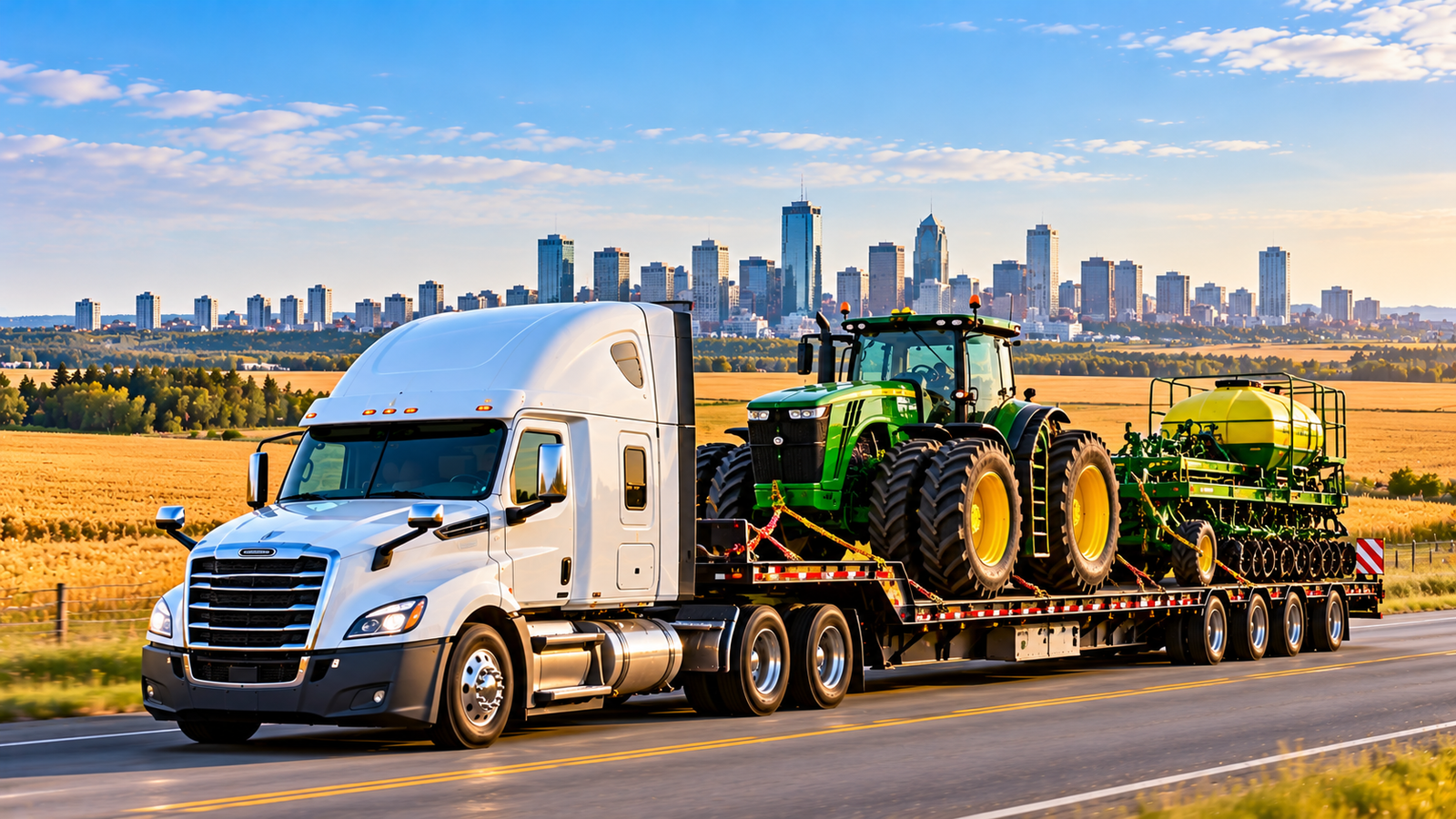
- Large agricultural machinery
- Certain cranes and specialized equipment
Not every RGN trailer can carry every machine. The trailer’s rated capacity, deck dimensions, axle configuration and loading arrangement must match the shipment.
4. Reduced Dependence on Separate Loading Ramps
The removable gooseneck creates a front-loading arrangement for suitable equipment.
This can reduce the need for separate loading ramps in certain situations. However, loading equipment, ground conditions and the machinery’s operating requirements still need to be assessed.
5. Useful for Specialized Heavy Haul Movements
Some machinery requires a trailer designed specifically around its height, weight and loading requirements.
An RGN trailer provides another option for planning these movements when a standard flatbed or step deck configuration is not suitable.
What Equipment Can Be Transported Using an RGN Trailer?
RGN trailers are frequently associated with construction, roadbuilding, mining, agriculture and industrial transportation.
The following equipment types are common examples of machinery that might require an RGN arrangement.
Excavators
Excavators are used for digging, earthmoving, demolition and construction work. Their height, operating weight and track configuration can make trailer selection important.
An RGN trailer might be suitable when the excavator’s dimensions and weight match the available deck and axle specifications.
Bulldozers
Bulldozers are heavy tracked machines used for grading, pushing material and preparing construction sites.
Their weight and ground-level loading requirements are among the reasons an RGN trailer is often considered for their transportation.
Wheel Loaders
Wheel loaders are used in construction, mining, material handling and industrial operations.
Depending on the machine’s dimensions and weight, an RGN trailer can provide a suitable transportation arrangement.
Motor Graders
Motor graders are used for road construction, surface preparation and grading operations.
Their overall length and operating weight must be checked carefully before selecting a trailer.
Industrial Machinery
Manufacturing and industrial facilities often transport large machines, production equipment and specialized components.
Some of these shipments require low-deck transportation or a particular loading configuration.
Agricultural Equipment
Large tractors, harvesting equipment and other agricultural machinery can also require specialized trailer arrangements.
The correct trailer depends on the machine’s dimensions, weight, ground clearance and loading method.
RGN Trailer vs. Step Deck Trailer vs. Lowboy Trailer
Businesses researching RGN Rental often compare removable gooseneck trailers with step deck and lowboy trailers.
Although these trailer types are used for specialized freight transportation, their designs and applications are different.
| Feature | RGN Trailer | Step Deck Trailer | Standard Lowboy |
|---|---|---|---|
| Main design | Detachable gooseneck | Two-level deck | Low main deck |
| Loading arrangement | Front loading after detachment | Depends on trailer configuration | Commonly uses ramps or other loading arrangements |
| Deck height | Low loading platform | Lower than a standard flatbed on its main deck | Low deck configuration |
| Common use | Heavy self-propelled machinery | Taller commercial freight and equipment | Heavy and tall equipment |
| Gooseneck | Removable | Fixed | Depends on trailer design |
| Main advantage | Front-loading capability | Additional vertical clearance | Low platform for equipment transportation |
When Should You Choose an RGN Trailer?
An RGN trailer is worth considering when the equipment needs a low loading approach and can be moved onto the trailer using the front-loading arrangement.
It is particularly relevant for certain tracked and wheeled machines.
When Is a Step Deck Trailer More Suitable?
A step deck trailer might be a better option when the cargo needs additional vertical clearance but does not require an RGN’s detachable front section.
For example, certain industrial components, agricultural equipment and construction materials can be transported using step deck configurations.
When Should You Consider a Lowboy?
Lowboy trailers are designed with a low main deck to accommodate heavy or tall equipment. Some lowboy configurations use removable goosenecks, while others have fixed or different loading arrangements. An RGN is therefore one type of specialized lowboy configuration rather than a completely unrelated trailer category.
The best option depends on cargo measurements, weight, loading requirements, trailer specifications and route conditions.
RGN Trailer Dimensions and Weight Capacity
Not all RGN trailers have identical dimensions or weight ratings. Their specifications vary according to manufacturer, model, deck design, axle configuration and additional equipment. Before choosing an RGN trailer, businesses should review the following details.
Main Deck Length
The main deck must provide enough usable space for the machinery or equipment being transported. The overall trailer length does not always represent the usable cargo space.
Deck Width
The usable deck width must accommodate the equipment’s tracks, tyres or support points. Some trailers offer optional deck extensions, but their use must follow the manufacturer’s rated capacity and operating instructions.
Deck Height
Deck height affects the available vertical clearance for the loaded equipment. This measurement is especially important when transporting tall machinery through routes with height restrictions.
Weight Capacity
The trailer’s rated capacity must be suitable for the cargo. The complete tractor-trailer combination must also meet applicable axle-group and gross vehicle weight limits.
Axle Configuration
RGN trailers are available in different axle configurations. The appropriate setup depends on the equipment’s weight, load distribution, route requirements and applicable regulations.
Hydraulic or Mechanical Detachment System
Some RGN trailers use hydraulic systems, while others use mechanical arrangements. Businesses should confirm the trailer’s operating requirements and ensure the equipment is maintained and operated according to manufacturer specifications.
What Affects RGN Trailer Rental Costs in Edmonton?
Businesses searching for RGN Rental in Edmonton often want to understand the expected cost before arranging equipment.
RGN rental prices vary depending on the trailer configuration, rental duration and additional requirements. There is no universal rental rate for every RGN trailer.
Here are the main factors that can influence pricing.
1. Trailer Size and Configuration
The trailer’s deck dimensions, axle configuration, rated capacity and detachable gooseneck system can influence its rental price. A specialized heavy-duty configuration might have different pricing from a standard RGN arrangement.
2. Rental Duration
The rental period is another important factor. Daily, weekly and long-term arrangements can have different pricing structures depending on the equipment provider.
3. Equipment Availability
The availability of a suitable trailer in Edmonton can influence rental arrangements, particularly when a shipment requires a specific axle configuration or deck size.
4. Pickup and Return Location
The location where the equipment is collected and returned can affect the overall cost. Businesses should confirm whether delivery, repositioning or return transportation charges apply.
5. Maintenance and Operating Responsibilities
Before signing an agreement, clarify which party is responsible for maintenance, inspections, repairs and equipment condition during the rental period.
6. Insurance and Additional Charges
Review insurance coverage, damage responsibilities, mileage conditions, deposits and other rental agreement terms. A detailed written quotation helps avoid confusion about the total cost.
What Should You Check Before Arranging RGN Rental?
Choosing an RGN trailer involves more than confirming that a trailer is available. The equipment must be appropriate for the cargo and the complete transportation arrangement.
Confirm the Equipment Specifications
Request the exact trailer specifications, including:
- Main deck length and width
- Deck height
- Rated weight capacity
- Axle configuration
- Detachment system
- Loading arrangement
- Any additional equipment or attachments
Measure the Machinery
Measure the equipment’s length, width and height. Confirm its operating or shipping weight and identify any removable components that affect the loaded dimensions. Do not rely only on the manufacturer’s general machine dimensions. Confirm the actual configuration being transported.
Review Ground and Loading Conditions
RGN loading requires a suitable area for detaching and reconnecting the gooseneck. The loading location should provide firm, level ground and enough room for the equipment and tractor to manoeuvre safely.
Check Cargo Securement Requirements
The equipment must be positioned and secured correctly before transportation. Securement methods should be appropriate for the machine’s weight, shape, tracks, wheels and designated securement points.
Confirm Transportation Responsibilities
If the rental arrangement does not include a driver or transportation service, confirm who will operate the tractor, handle the loading process, arrange permits and manage the shipment. A clear agreement helps define the responsibilities of each party.
Alberta Oversize and Overweight Regulations for RGN Transportation
An RGN trailer’s low deck and specialized design do not automatically exempt a shipment from provincial transportation regulations. Commercial vehicles operating on Alberta roads must comply with applicable weight and dimension requirements.
If a vehicle or load exceeds regulated limits, an appropriate permit might be required, subject to eligibility and permit conditions.
Alberta Commercial Vehicle Weight and Dimension Requirements
The Government of Alberta establishes weight and dimension limits for commercial vehicles to protect public safety and highway infrastructure.
These requirements apply to the complete vehicle configuration, not simply the trailer or cargo individually.
Before arranging heavy equipment transportation, carriers should review the relevant axle weights, gross vehicle weight and overall dimensions.
Oversize and Overweight Permits
Certain non-divisible loads that exceed standard regulated limits might qualify for an oversize or overweight permit.
Permit conditions can specify route restrictions, vehicle configurations, operating conditions and other requirements.
Alberta provides permit application information through its Transportation Routing and Vehicle Information System, commonly known as TRAVIS.
Edmonton Truck Routes and Municipal Requirements
Heavy vehicles operating within Edmonton must also consider municipal road restrictions and designated truck routes. The City of Edmonton publishes information about its truck route network, over-dimensional permits, overweight permits and restricted posted bridges.
Its published over-dimensional thresholds include:
- Width exceeding 2.6 metres
- Height exceeding 4.15 metres
- Length exceeding 22.86 metres
A permit is required for travel on Edmonton roads when the vehicle, including its load, exceeds the applicable thresholds.
Additional coordination requirements apply to certain exceptionally large movements.
Businesses should review the current requirements before arranging transportation because permit conditions, road restrictions and route requirements can change.
Route Planning for Heavy Equipment Transportation in Edmonton
An appropriate trailer is only one part of a successful heavy haul arrangement. The transportation route must also accommodate the complete loaded vehicle.
An RGN trailer carrying heavy machinery can have different height, width, length and weight characteristics depending on the equipment and trailer configuration.
Before dispatch, the route should be reviewed for:
- Bridge and overpass clearance
- Posted bridge weight restrictions
- Road width and turning radius
- Construction and roadwork zones
- Restricted truck routes
- Industrial site access
- Utility and overhead obstructions
- Seasonal road restrictions
- Permit-specific route conditions
Edmonton’s truck route network is particularly important for heavy commercial vehicles. The City directs heavy vehicles over specified weight or length thresholds to follow its truck route requirements.
For longer movements outside Edmonton, the route assessment should also consider provincial highway restrictions and any municipal roads along the journey. A route that appears suitable on a map should not be treated as approved for an oversized or overweight movement without the required checks.
Safe Loading and Cargo Securement for RGN Trailers
RGN trailers are specialized equipment, and their loading procedures require careful attention. The detachable gooseneck, loading surface, machinery position and cargo securement all play an important role in the operation.
Use Firm and Level Ground
The trailer should be positioned on a suitable, stable surface before the gooseneck is detached. Uneven or soft ground can affect trailer stability and interfere with the loading process.
Follow Manufacturer Operating Instructions
Hydraulic and mechanical detachment systems have specific operating procedures. Operators should follow the relevant manufacturer’s manual rather than relying on a general loading sequence.
Position the Equipment Correctly
Machinery should be centred and positioned according to the trailer’s load distribution requirements. Improper positioning can create uneven axle loading and affect vehicle handling.
Use Appropriate Cargo Securement Equipment
Chains, binders, straps and other securement equipment must be suitable for the machinery and its designated securement points. The securement arrangement should comply with applicable cargo securement requirements.
Inspect Before Departure
Before the vehicle moves, the operator should verify the gooseneck connection, locking mechanisms, air and electrical connections, cargo restraints, overall height and weight distribution.
The load should also be inspected during transportation as required by applicable rules and operating procedures.
RGN Trailer Transportation Services for Edmonton Businesses
Businesses looking for RGN Rental in Edmonton might have different requirements. Some need a trailer for a specific project, while others need a transportation company to move heavy machinery between locations.
These are different service requirements.
A standalone trailer rental gives the customer access to equipment under a rental agreement. Heavy haul transportation involves arranging the movement of cargo using suitable equipment and transportation resources.
Lubana Trucking’s published service offering focuses on freight transportation, including flatbed hauling and over-dimensional freight solutions. Businesses with specialized machinery or oversized commercial cargo can explore the available transportation services before deciding how to arrange a shipment.
Over-Dimensional Freight Transportation
For equipment and cargo that exceed standard transportation dimensions, explore Over-Dimensional Freight Transportation.
This service information covers transportation planning for oversized freight, including equipment requirements, route assessment, permits and shipment coordination.
Flatbed Hauling Services
For commercial freight requiring open-deck transportation, visit Flatbed Hauling Services. Flatbed hauling can be suitable for building materials, equipment and other cargo that fits the trailer’s specifications.
Edmonton Freight Transportation
Businesses looking for transportation options in Edmonton can also visit the Lubana Trucking Edmonton service location page. The page provides information about the company’s freight transportation services in the Edmonton market.
Lubana Trucking does not advertise standalone RGN trailer rentals. Customers looking for heavy equipment transportation can contact the company to discuss their shipment requirements and available transportation options.
Frequently Asked Questions About RGN Rental in Edmonton
1. What does RGN stand for in trucking?
RGN stands for Removable Gooseneck. It refers to a specialized lowboy trailer with a detachable front section that allows the main deck to be lowered for front loading.
2. What is an RGN trailer used for?
RGN trailers are commonly used for transporting heavy construction equipment, excavators, bulldozers, industrial machinery and other equipment that requires a suitable low-deck loading arrangement.
3. How does an RGN trailer load heavy equipment?
The operator detaches the gooseneck according to the manufacturer’s instructions and lowers the front of the deck. Suitable machinery can then be driven or moved onto the trailer. After loading, the gooseneck is reconnected and secured before transportation.
4. What is the difference between an RGN and a lowboy trailer?
A lowboy is a general type of trailer with a low main deck. An RGN is a lowboy configuration that features a removable gooseneck. Some lowboy trailers have different fixed or detachable front arrangements.
5. Is an RGN trailer better than a step deck?
It depends on the cargo. An RGN is often considered for heavy machinery that benefits from front loading and a low deck. A step deck is often suitable for freight that needs additional vertical clearance but does not require a removable gooseneck.
6. How much does RGN trailer rental cost in Edmonton?
The price depends on trailer specifications, rental duration, equipment availability, pickup and return arrangements, insurance and additional charges. Request a detailed quotation based on the specific equipment requirements.
7. Can an RGN trailer transport an excavator?
Yes, an RGN trailer is commonly considered for excavator transportation. However, the excavator’s weight, dimensions, track configuration and loading requirements must match the trailer’s specifications.
8. Does RGN transportation require an oversize permit in Alberta?
Not every RGN shipment requires an oversize permit. A permit might be required if the complete vehicle and load exceed applicable regulated dimensions or weight limits. The exact requirements depend on the shipment and route.
9. What is the difference between a hydraulic and mechanical RGN trailer?
A hydraulic RGN uses a hydraulic system to assist with detaching and lowering the gooseneck. A mechanical RGN uses a different mechanical arrangement. The operating process and safety requirements depend on the specific trailer model.
10. Does Lubana Trucking offer RGN trailer rentals?
Lubana Trucking’s published services focus on freight transportation rather than standalone RGN trailer rentals. Businesses requiring heavy equipment or oversized freight transportation can contact the company to discuss their shipment requirements and available options.
Final Thoughts
RGN trailers play an important role in specialized heavy equipment transportation. Their removable gooseneck design allows the front of the deck to be lowered, creating a loading arrangement suitable for certain tracked and wheeled machinery.
For businesses researching RGN Rental in Edmonton, understanding the trailer’s deck dimensions, weight capacity, axle configuration, loading process and operating requirements is essential before arranging equipment.
Transportation planning also needs to account for Alberta’s commercial vehicle regulations, municipal road restrictions, permits and cargo securement requirements.
If your business needs to move heavy machinery, construction equipment or oversized industrial freight, choosing the right transportation arrangement is an important part of the process. Lubana Trucking provides flatbed hauling and over-dimensional freight transportation solutions for businesses with specialized shipping requirements.
Contact Lubana Trucking to discuss your freight transportation requirements and explore suitable options.
External references used
These are useful authoritative references for the article. Keep them as contextual citations or a short “Official Resources” section near the end of the blog.
1. Government of Alberta: Commercial Vehicle Weight and Dimension Regulations. Explains commercial vehicle weight and dimension limits. Alberta.ca
2. Government of Alberta: Oversize and Overweight Permits. Explains permit eligibility and TRAVIS applications. Alberta.ca
3. City of Edmonton: Truck Routes, Dangerous Goods and Permits. Covers truck routes, over-dimensional permits, overweight permits and bridge restrictions.