 admin
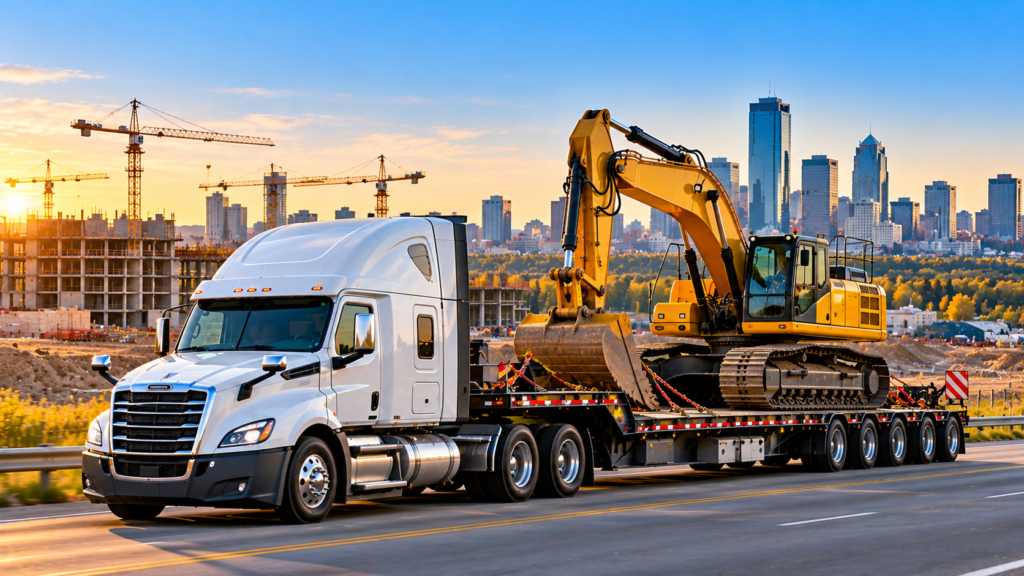
A construction project can depend on machinery arriving at the right site at the right time. An excavator may need to move from a rental yard to a new development, a wheel loader may be transferred between job sites, or a bulldozer may need transportation after completing work on an infrastructure project.
Moving this equipment requires more planning than arranging a standard freight shipment. Machinery dimensions, operating weight, ground clearance, loading requirements and road restrictions all influence how it can be transported.
Businesses looking for construction equipment transportation in Edmonton need to consider the entire movement, from preparing the machine at its current location to unloading it at the destination.
A trailer that works for one excavator may not be suitable for a larger loader or bulldozer. Attachments can also change the overall dimensions, while certain machines may require special transportation arrangements because of their weight or size.
This guide explains what businesses should consider when moving construction machinery in Edmonton, how to prepare equipment for hauling and what to confirm before arranging transportation.
Why Construction Machinery Requires a Different Transportation Plan
Construction equipment is designed to perform work on building sites, roads, industrial properties and other demanding environments. Its size, weight and configuration can make transportation more complicated than moving ordinary commercial freight.
Consider a contractor moving an excavator from one development site to another. The machine may have a bucket attached, a wide undercarriage and a boom that needs to be positioned correctly for transportation.
The transportation provider needs to understand the machine’s complete dimensions and weight before selecting suitable equipment.
The same applies to wheel loaders, bulldozers and other construction machinery. Even equipment from the same category can have different transportation requirements depending on its make, model and attachments.
Several factors influence the transportation arrangement:
- Overall machine length, width and height.
- Operating weight and weight distribution.
- Ground clearance and loading angle.
- Removable attachments and accessories.
- Trailer capacity and deck configuration.
- Pickup and delivery site access.
- Applicable road restrictions and permit conditions.
Missing any of these details can lead to an unsuitable trailer selection or additional arrangements before the shipment can move.
Which Construction Equipment Needs Specialized Hauling?
Not every construction machine requires the same type of transportation. The equipment’s configuration and specifications determine how it should be moved.
Excavators
Excavators are commonly used for digging, trenching, site preparation and material handling.
Their transportation requirements depend on factors such as operating weight, track width, boom configuration and bucket attachments.
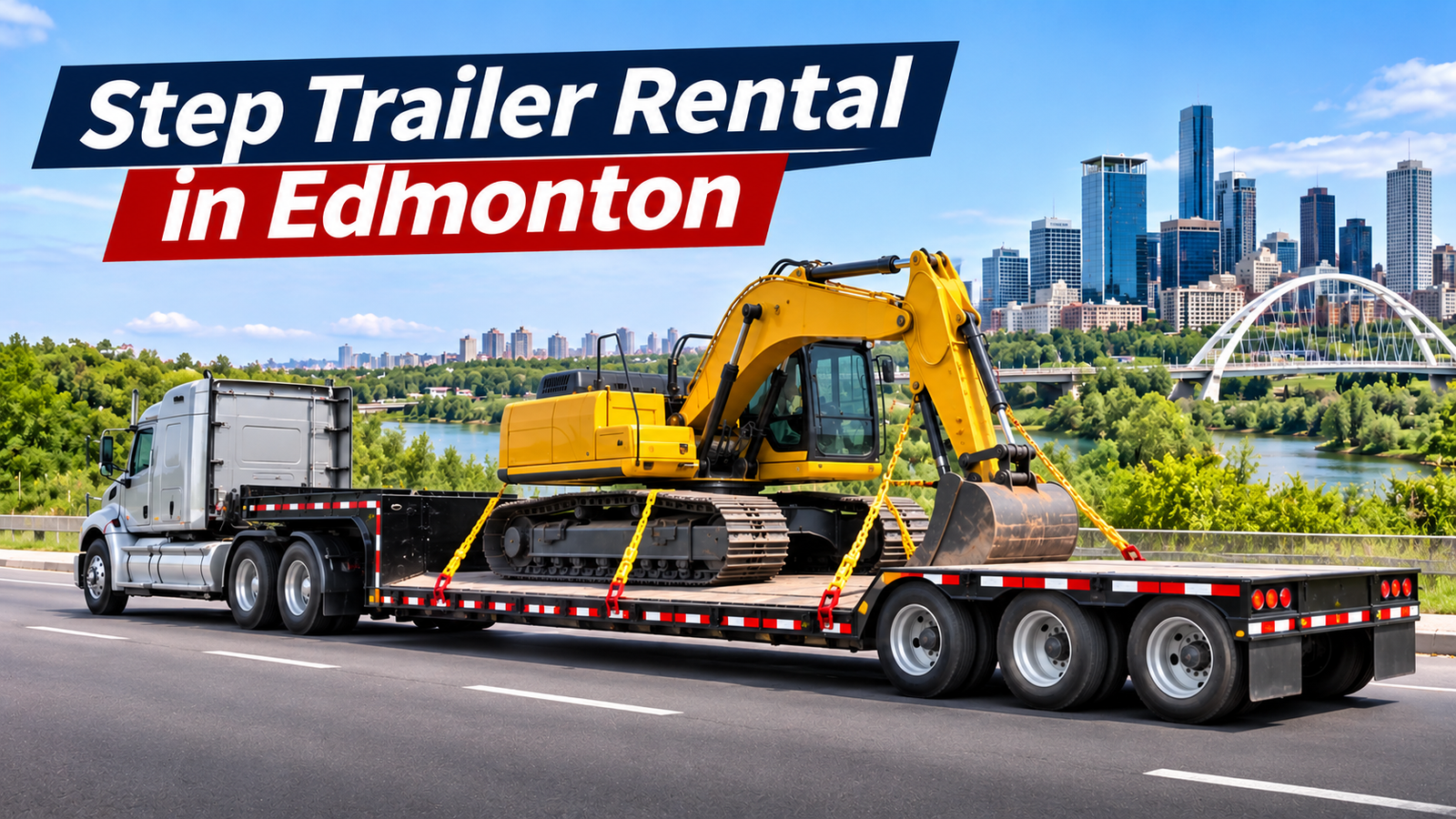
Before arranging an excavator shipment, confirm whether the bucket can remain attached or needs to be transported separately. The boom, arm and other movable components should be positioned according to the manufacturer’s transportation instructions.
Larger excavators may require specialized hauling arrangements based on their loaded dimensions and weight.
Bulldozers
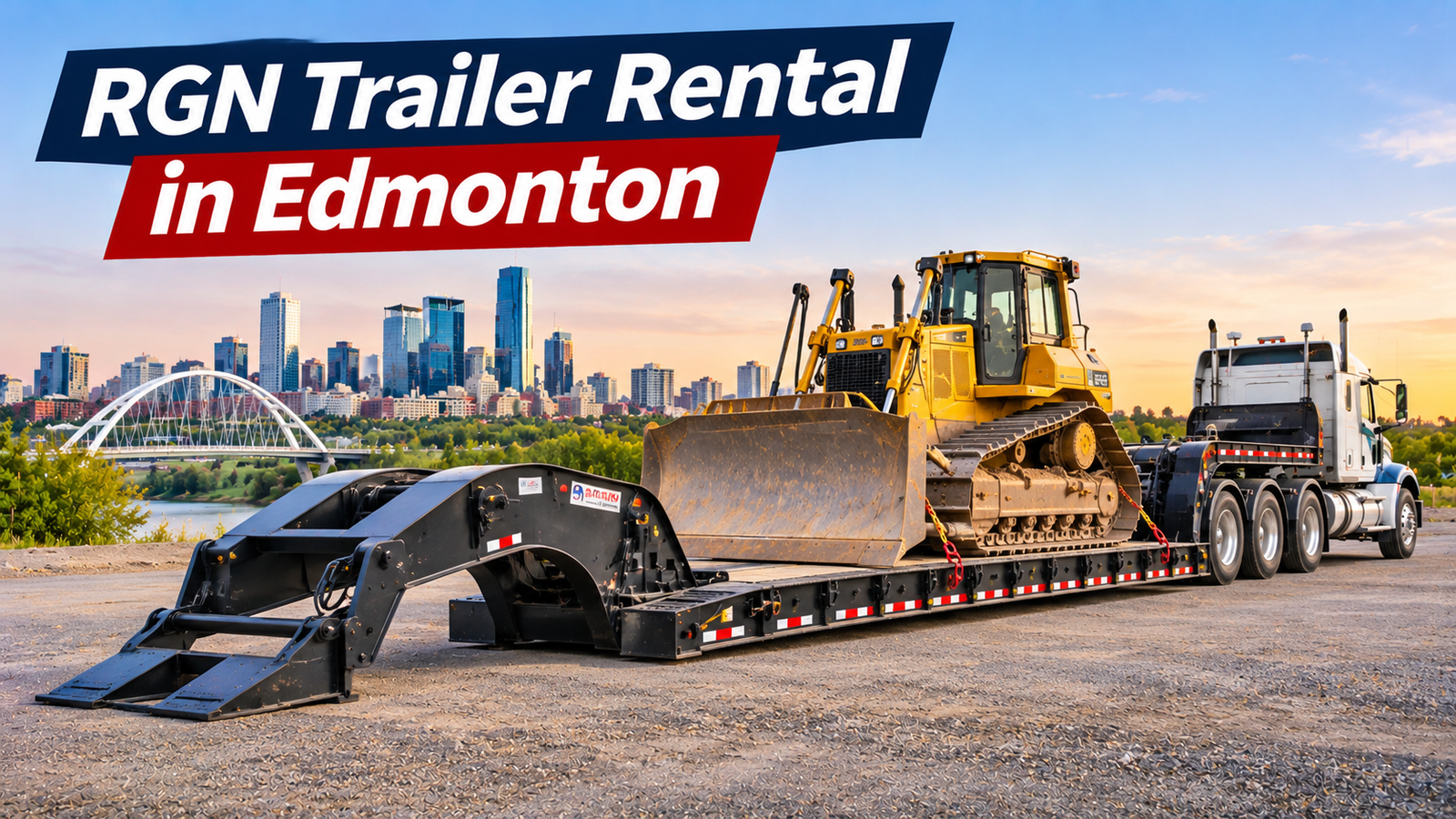
Bulldozers are used for earthmoving, grading and site preparation. Their tracked undercarriages, blades and other attachments can affect the loading and transportation arrangement.
The blade may need to be removed or positioned differently depending on the machine’s dimensions and the selected trailer.
Businesses should provide the bulldozer’s exact specifications rather than relying on a general equipment category when requesting a quote.
Wheel Loaders
Wheel loaders are used to move soil, gravel, construction materials and other bulk materials.
Their bucket size, overall width, operating weight and height can influence trailer selection.
If the bucket is removable, the shipper should confirm whether it will travel with the machine or as a separate freight item.
Skid Steers and Compact Construction Equipment
Skid steers and compact loaders are generally smaller than large earthmoving machines, but their transportation still requires accurate measurements.
Attachments such as buckets, forks, augers and grapples can affect the total shipment dimensions.
Multiple smaller machines may sometimes be considered for one transportation arrangement, depending on the combined weight, available deck space and loading requirements.
Graders, Rollers and Other Road Construction Equipment
Road construction projects use machinery such as motor graders, compactors, rollers and paving equipment.
These machines can have unusual dimensions or weight distributions. Some also include components that need to be folded, secured or removed before transportation.
The transportation provider should review the equipment specifications and loading instructions before confirming the arrangement.
How to Select the Right Trailer for Construction Equipment
Trailer selection should begin with the machinery specifications, not simply the type of truck available.
The transportation provider needs to assess the equipment’s weight, dimensions, loading method and route before deciding which trailer configuration is suitable.
Flatbed Trailers for Suitable Construction Machinery
Flatbed trailers provide an open deck that can accommodate various types of industrial and construction freight.
Depending on the machine’s dimensions and weight, they may be suitable for:
- Compact construction equipment.
- Certain skid steers and loaders.
- Smaller machinery attachments.
- Construction tools and equipment components.
- Machinery parts and building materials.
Flatbeds can provide flexibility for loading and securing suitable cargo. However, not every construction machine can be transported on a standard flatbed.
Lubana Trucking offers flatbed hauling services for construction materials, machinery, industrial equipment and other suitable freight.
Lowbed and Specialized Trailer Arrangements
Some larger machines require a lower loading deck or a specialized trailer configuration.
Lowbed and other specialized arrangements may be considered when equipment dimensions, ground clearance or loaded height make a conventional flatbed unsuitable.
The correct configuration depends on the machine’s specifications, weight distribution and loading method. Availability should be confirmed before booking.
When Oversized Load Transportation Is Required
Construction equipment may exceed standard legal road dimensions or weight limits once loaded onto a trailer.
This can apply to larger excavators, bulldozers, graders and other heavy machinery.
Depending on the shipment, transportation may require:
- A suitable specialized trailer.
- Oversize or overweight permits.
- Route assessment.
- Pilot or escort vehicles.
- Specific travel conditions.
- Additional coordination with relevant authorities.
Lubana Trucking provides oversized load transportation for qualifying heavy equipment and over-dimensional freight.
What Information Should You Collect Before Moving Construction Equipment?
Accurate equipment information helps the transportation provider assess the shipment before dispatch.
A machine’s model name alone is not enough. Two machines that look similar may have different operating weights, widths or attachment configurations.
Confirm the Make and Model
Start by identifying the manufacturer, model number and equipment type.
This helps the transportation provider understand which machinery is being moved and identify the specifications that need to be checked.
Measure the Complete Equipment
Record the following measurements:
- Length: The full length of the machinery in its transportation configuration.
- Width: The widest point, including tracks, tyres and attachments.
- Height: The highest point of the machine when prepared for transportation.
- Weight: The actual operating or transport weight, depending on the manufacturer’s specifications and shipment configuration.
Include any components that extend beyond the main body.
If attachments are removed and transported separately, record their individual dimensions and weights.
Review Weight Distribution
The total equipment weight is important, but its distribution also matters.
The transportation provider needs to consider how the load will sit on the trailer and whether the selected configuration can accommodate the weight and axle requirements.
Do not estimate the machine’s weight based only on its appearance or equipment category. Use verified manufacturer information or other reliable weight records.
Prepare an Equipment Information Sheet
The following details can help organise the shipment before requesting a quote.
| Shipment detail | Information required |
|---|---|
| Equipment type | Excavator, bulldozer, loader, grader or other machine |
| Manufacturer and model | Exact make and model number |
| Overall length | Complete transport length |
| Overall width | Widest measurement |
| Overall height | Height in transport configuration |
| Equipment weight | Verified operating or transport weight |
| Attachments | Included, removed or shipped separately |
| Operating condition | Operational or non-operational |
| Loading method | Drive-on, crane, winch or other method |
| Pickup location | Current equipment location |
| Delivery location | Complete destination address |
Providing these details early makes it easier to assess trailer suitability and identify any additional transportation requirements.
Preparing Construction Machinery for Transportation
A construction machine should be prepared according to its manufacturer’s transportation instructions and the requirements of the selected hauling arrangement.
The preparation process may differ between an operational excavator and a machine that cannot move under its own power.
Remove or Secure Attachments
Buckets, blades, forks, grapples and other attachments can increase the equipment’s overall dimensions.
Before loading, determine whether these components can remain attached or need to be removed.
If attachments are transported separately, identify them as separate freight items and provide their individual measurements and weights.
Position Moving Components
Booms, arms, blades and other movable parts should be positioned and secured according to the manufacturer’s instructions.
Check that components cannot move unexpectedly during loading or transportation.
Do not assume that a machine is ready for hauling simply because it can be driven onto a trailer.
Check the Equipment’s Operating Condition
Confirm whether the machinery is operational.
If a machine cannot start, move or steer, the loading arrangement may need additional equipment such as a suitable winch or crane.
Communicate mechanical issues before booking. The transportation provider needs this information to assess the loading requirements.
Inspect for Loose Items and Leaks
Remove or secure loose tools, accessories and detachable components.
Check for visible fluid leaks and follow the manufacturer’s requirements for fuel, batteries and other systems.
Any special handling instructions should be communicated before loading.
Prepare the Loading Area
Make sure the pickup site has enough space for the truck and trailer to approach, position and load the machine.
The loading surface should be suitable for the machinery and the equipment used to load it.
Confirm that the loading crew, ramps, crane or other required equipment will be available when the truck arrives.
Loading and Securing Heavy Construction Equipment
Loading is a critical part of construction equipment transportation. A suitable trailer can still be an unsuitable choice if the machinery cannot be loaded safely or positioned correctly.
Confirm the Loading Method
Some construction equipment can drive onto a trailer using suitable ramps.
Other machines may require winching, lifting or specialised loading arrangements.
The correct method depends on the machine’s operating condition, ground clearance, weight and loading instructions.
Position the Machine Correctly
The equipment should be positioned according to the transportation plan and the trailer manufacturer’s requirements.
Weight distribution, axle loading, clearance and the machine’s centre of gravity should all be considered.
Secure the Equipment Properly
Construction machinery must be restrained to prevent unwanted movement during transportation.
The securing arrangement should account for:
- Machine weight.
- Designated securing points.
- Track or tyre configuration.
- Removable attachments.
- Trailer design.
- Applicable cargo securement requirements.
The transportation provider should determine the appropriate restraint arrangement for the specific machine and shipment.
Complete a Pre-Departure Inspection
Before the truck leaves, the responsible team should verify that the machine and its attachments are secured.
Check the load position, restraints, overall loaded dimensions and any permit or route conditions that apply.
This final review helps identify issues before the equipment enters public roads.
Oversized Construction Equipment: Permits and Route Planning in Alberta
Some construction machinery cannot be transported using standard commercial vehicle dimensions or weight limits.
When the loaded vehicle or combination exceeds the applicable limits, the carrier may need an oversize or overweight permit.
According to the Government of Alberta, these permits allow eligible vehicles to operate under specific conditions intended to protect public safety and highway infrastructure.
Check the Complete Loaded Dimensions
Permit requirements are based on the transportation configuration, not just the machine’s standalone dimensions.
The assessment should include:
- Trailer deck height.
- Equipment height.
- Total loaded width.
- Overall combination length.
- Gross vehicle weight.
- Axle and axle-group weights.
These details help determine which requirements apply to the shipment.
Review the Transportation Route
A route suitable for a regular freight truck may not be appropriate for oversized machinery.
The route assessment should consider:
- Bridge and overhead clearances.
- Road construction and restrictions.
- Weight limitations.
- Turning space.
- Road width and access.
- Municipal road requirements.
- Seasonal road conditions.
The pickup and delivery sites also need to accommodate the truck and trailer combination.
Confirm Permit and Escort Requirements
Permit conditions depend on the shipment’s dimensions, weight, vehicle configuration and route.
Certain movements may require pilot or escort vehicles, restricted travel hours or other conditions.
The carrier should confirm the applicable permit requirements and who is responsible for arranging them before dispatch.
For current requirements, consult the Government of Alberta’s oversize and overweight permit information.
What Affects Construction Equipment Transportation Costs in Edmonton?
The cost of moving construction machinery depends on the equipment, transportation configuration and route.
A compact loader and a large excavator may require very different arrangements, even when they are travelling between similar locations.
| Cost factor | How it affects transportation |
|---|---|
| Equipment weight | Influences trailer suitability, weight distribution and axle requirements |
| Equipment dimensions | Larger or wider machinery may require specialized arrangements |
| Transportation distance | Pickup and delivery locations influence the overall rate |
| Trailer configuration | Different machinery may require different trailer types |
| Loading method | Crane, winch or other special loading arrangements can add costs |
| Permits | Oversized or overweight shipments may require additional permits |
| Escort requirements | Certain movements may require pilot or escort vehicles |
| Route restrictions | Detours, access limitations and road conditions can affect planning |
| Scheduling | Required pickup and delivery dates influence availability |
| Additional services | Special handling or coordination may affect the final quote |
How to Request an Accurate Quote
When contacting a transportation provider, include the machine’s make and model, complete dimensions, weight, attachment details and operating condition.
Also provide the exact pickup and delivery locations, preferred dates and loading arrangements.
If the machine is oversized, share any available equipment specifications or previous transportation details.
Complete information helps the provider evaluate the shipment before confirming the equipment and transportation plan.
Why Consider Lubana Trucking for Construction Equipment Transportation?
Lubana Trucking provides freight transportation services for construction, industrial and other commercial sectors across Alberta, Canada and the United States.
Its Edmonton service information identifies construction machinery, heavy equipment, building materials, steel products and oversized freight among the cargo types it supports.
Its published services include:
- Flatbed transportation: For suitable construction machinery, materials and equipment components.
- Oversized load transportation: For qualifying machinery and freight that requires specialized hauling arrangements.
- Freight brokerage: For coordinating transportation through its carrier network.
- Project management: For freight movements requiring additional planning and coordination.
The appropriate transportation arrangement depends on the equipment specifications, route and loading requirements. Businesses should confirm trailer availability, permit arrangements and service coverage for their particular shipment.
Contact Lubana Trucking
- Phone: +1 (877) 758-2262
- Email: sales@lubanatrucking.com
- Website: https://lubanatrucking.com/
When requesting a quote, provide the equipment details, dimensions, weight, pickup location and destination so the transportation requirements can be reviewed.
Frequently Asked Questions About Construction Equipment Transportation in Edmonton
What types of construction equipment can be transported by truck?
Depending on dimensions, weight and loading requirements, construction equipment transportation can include excavators, bulldozers, wheel loaders, skid steers, graders, rollers, compactors and machinery attachments.
What trailer is used to transport heavy construction equipment?
The appropriate trailer depends on the machine’s weight, dimensions, ground clearance and loading requirements. Flatbed trailers may suit certain equipment, while larger or taller machinery may require a lowbed or another specialized configuration.
Does construction equipment transportation require permits in Alberta?
Some machinery shipments exceed regulated vehicle weight or dimension limits. Depending on the loaded configuration and route, oversize or overweight permits may be required. The carrier should confirm the applicable requirements before transportation.
Can excavators and bulldozers be transported with their attachments?
This depends on the machine’s overall dimensions, weight and trailer capacity. Some attachments may remain with the equipment, while others may need to be removed and transported separately.
How should construction equipment be prepared before transportation?
Confirm the equipment dimensions and weight, secure or remove attachments, position movable components according to manufacturer instructions and communicate any mechanical issues. The loading area should also be ready for the selected trailer and loading method.
What information is needed for a construction equipment hauling quote?
Provide the equipment make and model, length, width, height, weight, attachment details, operating condition, pickup and delivery addresses and preferred transportation dates.
Can oversized construction machinery be transported across Alberta?
Eligible oversized machinery can be moved under the applicable permit conditions. The route, vehicle configuration, dimensions and weight must be assessed before the shipment is arranged.
Does Lubana Trucking transport construction machinery in Edmonton?
Lubana’s Edmonton service information identifies construction machinery, heavy equipment and oversized freight among the cargo it supports. Its published services include flatbed and oversized load transportation. Confirm the specific equipment, route and availability before booking.
Final Thoughts
Construction equipment transportation in Edmonton requires a clear understanding of the machinery, the trailer and the route before the shipment begins.
A successful movement starts with accurate equipment measurements and weight information. From there, businesses can determine the appropriate trailer, prepare attachments, organise loading and review any permit requirements.
Job-site access also deserves attention. A truck may be suitable for the machinery but unable to reach the intended unloading area because of narrow entrances, limited turning space or unsuitable ground conditions.
Whether moving an excavator, bulldozer, loader or other construction machine, providing complete shipment information helps the transportation provider assess the requirements and plan the movement.
Need to move construction equipment in Alberta? Contact Lubana Trucking with your machinery specifications, pickup location and destination to discuss available transportation options.