
 Lubana
Choosing between trucking companies in Edmonton involves more than comparing transportation rates. Your freight type, delivery requirements, pickup location, destination, equipment needs and communication expectations all affect which carrier is right for your business. The right freight partner should understand your shipment requirements and provide a suitable transportation solution. Before making a decision, compare the services, equipment, coverage and operating processes of different Edmonton freight transportation providers.
Whether you regularly move commercial goods, construction materials, industrial equipment or temperature-sensitive shipments, selecting a suitable trucking company can help reduce avoidable delays, improve shipment coordination and support a more dependable supply chain.
This guide explains what Edmonton businesses should evaluate before choosing a trucking company and how to identify a freight partner that matches their transportation requirements.
1. Check Whether the Company Handles Your Type of Freight
Not every trucking company handles every type of shipment. A carrier that regularly transports standard palletized goods may not be the right choice for oversized machinery or freight that requires temperature control.
Start by identifying what you need to move. Then check whether the company has the appropriate equipment, experience and service capabilities.
Here are some common freight requirements to consider.
Flatbed Freight
Flatbed transportation is suitable for cargo that is too large, bulky or irregularly shaped for a standard enclosed trailer. Common examples include construction materials, industrial machinery, steel products and certain types of equipment.
When comparing providers, ask about load securement, cargo dimensions, weight limits and loading requirements. You should also confirm whether the carrier can accommodate the specific dimensions and weight of your shipment.
Learn more about flatbed hauling services and the types of freight they can accommodate.
Oversized and Over-Dimensional Loads
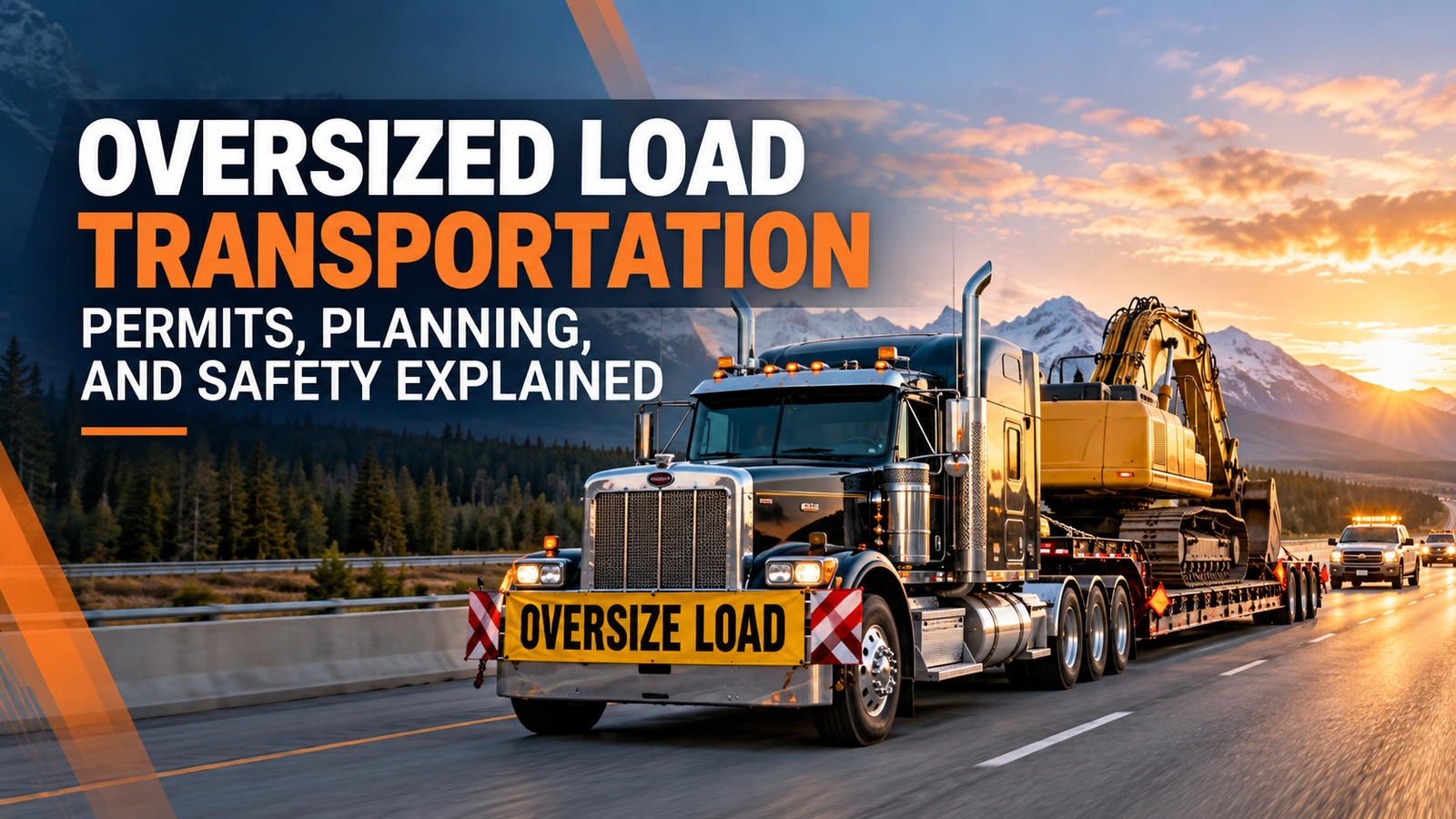
Oversized freight requires additional planning because the shipment may exceed standard legal size or weight limits. Depending on the route and load specifications, transportation may involve permits, route assessments, escort vehicles and other requirements.
Before selecting a carrier, confirm that the company can assess your shipment dimensions and coordinate the necessary transportation arrangements.
For specialized shipments, review the provider’s oversized load transportation capabilities.
Dry Van Shipments
Dry van trailers are commonly used to transport general freight that needs protection from weather and road conditions. They are often suitable for packaged products, palletized goods, retail inventory and other non-temperature-sensitive cargo.
Ask whether the carrier can accommodate your shipment’s total weight, dimensions, loading method and delivery schedule.
Temperature-Controlled Freight
Some products require a controlled temperature throughout transportation. This may include certain food products, pharmaceuticals and other temperature-sensitive goods.
If your shipment has temperature requirements, ask about the available equipment, required temperature range, monitoring process and any special handling procedures. Do not assume that every carrier offering general freight services can accommodate temperature-sensitive cargo.
2. Evaluate the Company’s Service Area and Route Coverage
A trucking company’s service area should match your actual shipping routes. A provider may operate in Edmonton but may not support the destination or transportation requirements your business needs.
Before choosing a freight partner, confirm:
- Whether the company handles pickups and deliveries in your required locations.
- Whether it supports regional, long-distance or cross-border transportation.
- Whether the destination is covered directly or through a coordinated carrier network.
- Whether the company can accommodate recurring shipments on your preferred routes.
- Whether additional coordination is required for remote or restricted-access delivery locations.
For Edmonton businesses shipping freight across Alberta, other parts of Canada or the United States, route coverage is an important part of the evaluation.
Also consider how frequently you ship. A company that can support your current shipment may not necessarily be suitable for a growing operation with additional routes or changing freight requirements.
3. Review Safety Standards, Insurance and Compliance
Freight transportation involves operational and financial risks. A suitable trucking partner should be able to explain how it manages safety, cargo protection and applicable transportation requirements.
Do not rely only on general statements such as “safe transportation” or “reliable service.” Ask specific questions and request relevant documentation where appropriate.
Ask About Insurance Coverage
Confirm what insurance coverage applies to your shipment and whether it is appropriate for the cargo’s declared value.
Discuss:
- Cargo insurance and applicable coverage limits.
- Exclusions or limitations.
- Requirements for declaring high-value freight.
- The process for reporting damage or loss.
- Whether additional coverage is available when required.
Make sure you understand the coverage before the shipment is dispatched.
Check Safety and Operating Procedures
Ask how the company approaches driver safety, equipment maintenance, load securement and shipment handling.
For specialized freight, confirm whether the carrier understands the requirements associated with the cargo and transportation route.
Confirm Regulatory Requirements
Transportation requirements can vary depending on the shipment, route, vehicle configuration and jurisdiction. Cross-border freight may involve additional customs and documentation requirements.
For oversized or overweight loads, confirm who is responsible for checking permit requirements and coordinating the necessary arrangements.
A professional freight partner should be able to explain its responsibilities clearly rather than leaving important compliance questions unanswered.
4. Compare Equipment and Transportation Capabilities
The right equipment helps ensure that freight can be loaded, secured and transported appropriately. Before requesting a quote, provide accurate shipment information and ask the company to confirm equipment suitability.
Depending on your cargo, you may need:
| Freight requirement | Equipment or service to discuss |
|---|---|
| General palletized freight | Dry van or enclosed trailer |
| Construction materials | Flatbed or suitable deck equipment |
| Industrial machinery | Flatbed or specialized transportation |
| Oversized equipment | Over-dimensional transportation |
| Temperature-sensitive cargo | Temperature-controlled equipment |
| Freight requiring carrier coordination | Freight brokerage services |
The table provides general guidance. The final equipment selection should depend on the shipment’s dimensions, weight, loading method, handling requirements and destination.
A carrier should not recommend equipment based only on the product description. Accurate measurements and shipment details are essential.
5. Understand How the Company Coordinates Freight
Transportation involves more than moving a shipment from pickup to delivery. Good coordination helps businesses plan around pickup schedules, delivery appointments, documentation and changing shipment requirements.
When comparing trucking companies in Edmonton, ask how they manage communication throughout the transportation process.
Consider these questions:
- Who will be your main point of contact?
- How are pickup and delivery schedules confirmed?
- How will you receive updates if a shipment is delayed?
- Who should you contact when shipment details change?
- How are delivery appointments and special instructions handled?
- What information is provided after delivery?
Clear communication is particularly important for businesses with multiple shipments, strict delivery windows or time-sensitive operations.
Before booking, understand how the provider communicates and what level of shipment visibility it can actually offer. Avoid assuming that every carrier provides live tracking or automated notifications.
6. Look Beyond the Initial Freight Quote
Price is an important consideration, but the lowest quote does not always represent the most suitable transportation option.
A freight quote should be evaluated against the shipment requirements and the services included. Two providers may offer different prices because their equipment, route arrangements, accessorial services or operating requirements differ.
When comparing quotes, review:
Transportation charges: Understand the base freight rate and what it covers.
Additional services: Check whether loading assistance, special handling, appointments or other requested services involve additional charges.
Fuel and accessorial charges: Ask which additional fees may apply to your shipment.
Insurance requirements: Confirm the coverage included and whether additional coverage is needed.
Delivery arrangements: Check whether the quoted service matches your required pickup and delivery schedule.
Quote validity: Confirm how long the rate remains valid and whether shipment changes can affect the price.
Provide the same shipment information to each provider so that you can make a fair comparison.
A useful quote should explain the transportation arrangement clearly. If any charge or service is unclear, ask for clarification before approving the shipment.
7. Consider Freight Brokerage When Your Shipment Needs It
Some businesses need transportation arrangements that involve more than one carrier or a specific equipment requirement. In these situations, freight brokerage may help coordinate suitable transportation capacity.
A freight broker works with carriers to arrange transportation based on shipment requirements, route availability and other relevant factors.
When evaluating a brokerage provider, ask:
- How does it select and coordinate carriers?
- Does it understand your freight type and handling requirements?
- How are transportation rates and service details communicated?
- Who manages communication during the shipment?
- How are delays or other transportation issues handled?
The important point is to understand who is responsible for each part of the shipment.
Businesses looking for coordinated transportation arrangements can explore freight brokerage services and discuss whether this option fits their shipping needs.
8. Check the Company’s Experience With Your Transportation Requirements
A company’s general experience in trucking does not automatically mean it is suitable for every type of freight.
Look for relevant experience with the shipment category, equipment and routes you use. For example, a business moving construction machinery should assess a carrier’s experience with heavy or oversized cargo rather than relying only on its experience with standard dry van freight.
Ask practical questions:
- Has the company handled similar freight before?
- Does it understand the loading and securement requirements?
- Can it explain the documentation needed for the route?
- Does it understand the challenges associated with your delivery location?
- Can it support the shipment schedule you require?
You do not need a provider to claim experience with every possible freight category. You need one that can demonstrate a suitable approach to your specific transportation requirements.
9. Review the Company’s Reputation and Business Practices
A company’s reputation can help you understand how it works with customers. However, online reviews should be considered alongside service details, documentation and direct communication.
When reviewing a trucking company, look for consistent feedback about:
- Communication and responsiveness.
- Pickup and delivery coordination.
- Handling of shipment issues.
- Accuracy of quotes and billing.
- Professionalism during customer interactions.
Pay attention to how the company responds to concerns, not just its overall rating.
You can also review its website to understand its services, locations, contact information and business operations. If important information is missing, ask the company directly before making a commitment.
10. Prepare the Right Information Before Requesting a Freight Quote
Incomplete shipment information can make it difficult for a trucking company to recommend suitable equipment or provide an accurate quote.
Prepare the following details before contacting potential freight partners.
| Information | What to provide |
|---|---|
| Freight description | What is being shipped |
| Quantity | Number of pieces, pallets or skids |
| Weight | Total shipment weight |
| Dimensions | Length, width and height of each item |
| Pickup location | Complete origin address and postal code |
| Delivery location | Complete destination address and postal code |
| Pickup date | Preferred pickup date and time window |
| Equipment | Flatbed, enclosed trailer or other required equipment |
| Special handling | Temperature control, dangerous goods or other requirements |
| Shipment value | Declared value when relevant to insurance requirements |
For oversized freight, accurate dimensions and weight are particularly important. These details help determine whether specialized equipment, permits or additional route planning may be necessary.
Providing complete information at the beginning can reduce unnecessary follow-up and help the carrier assess your requirements more effectively.
Why Edmonton Businesses Should Choose a Freight Partner Carefully
Edmonton businesses operate across a range of industries, including construction, manufacturing, energy, wholesale distribution and retail. Each industry can have different freight requirements.
A construction company may need to move machinery or building materials. A distributor may need regular transportation for palletized inventory. An industrial business may require specialized equipment for large or unusually shaped cargo.
Choosing a trucking partner based on actual shipping needs helps businesses avoid mismatches between freight requirements and transportation capabilities.
The right decision should consider more than price or a company’s general service description. It should account for equipment, route coverage, communication, safety procedures, insurance and the provider’s ability to coordinate the shipment.
Why Consider Lubana Trucking for Freight Transportation in Edmonton?
Lubana Trucking provides freight transportation services from Edmonton, Alberta, with service offerings that include flatbed hauling, over-dimensional transportation, temperature-controlled shipping, dry van logistics and freight brokerage.
The company’s Edmonton service page describes transportation support for businesses shipping across Alberta, Canada and the United States.
Rather than assuming that one transportation option fits every shipment, businesses should discuss their cargo type, dimensions, weight, origin, destination and delivery requirements with the team.
This information helps determine whether the required service and equipment are suitable for the shipment.
If you are comparing freight providers, you can review Lubana Trucking’s Edmonton service information and submit your shipment details for a quote.
Frequently Asked Questions
How do I choose the right trucking company in Edmonton?
Start by identifying your freight type, shipment dimensions, weight, pickup and delivery locations. Then compare companies based on equipment, route coverage, safety procedures, insurance, communication and quote transparency. Choose a provider that can explain how it will handle your specific shipment.
What should I check before hiring a trucking company?
Review the company’s service capabilities, equipment options, insurance coverage, safety procedures and experience with your type of freight. Confirm the transportation arrangements, responsibilities and possible additional charges before booking.
What types of freight can trucking companies transport?
Depending on their equipment and services, trucking companies may transport general palletized freight, construction materials, machinery, oversized equipment and temperature-sensitive products. Available services vary by provider, so confirm the company’s capabilities before booking.
Are all Edmonton trucking companies able to handle oversized loads?
No. Oversized transportation may require specialized equipment, route planning, permits and other arrangements. Confirm that the provider can assess your load dimensions, weight and route requirements before scheduling transportation.
What information do I need to get a trucking quote?
You should provide the freight description, quantity, weight, dimensions, pickup and delivery addresses, preferred dates, equipment requirements and any special handling instructions. Accurate details help the company assess the shipment and prepare a more suitable quote.
Is the cheapest trucking quote always the best option?
No. A lower price may not include the same equipment, services, insurance arrangements or delivery requirements as another quote. Compare what each provider offers and check for additional charges before making a decision.
What is the difference between a trucking company and a freight broker?
A trucking company generally provides or arranges transportation using its own equipment or operating resources. A freight broker coordinates transportation by connecting shippers with suitable carriers. Some transportation providers offer brokerage services alongside other freight solutions.
Can a trucking company in Edmonton transport freight across the Canada-US border?
Some providers support cross-border transportation between Canada and the United States. However, route availability, shipment type, customs documentation and applicable regulatory requirements should be confirmed before booking.
Final Thoughts
Choosing among trucking companies in Edmonton requires a clear understanding of your freight and business requirements. Compare transportation capabilities, equipment, route coverage, safety procedures, insurance, communication and quote details before selecting a provider.
A suitable freight partner should be able to explain how it will handle your shipment, what services are included and what information it needs from you.
If your business is planning a shipment from Edmonton, review your freight requirements and discuss the available transportation options with Lubana Trucking.
Ready to discuss your shipment? Contact Lubana Trucking with your pickup location, destination, freight details and preferred shipping date to request a transportation quote.