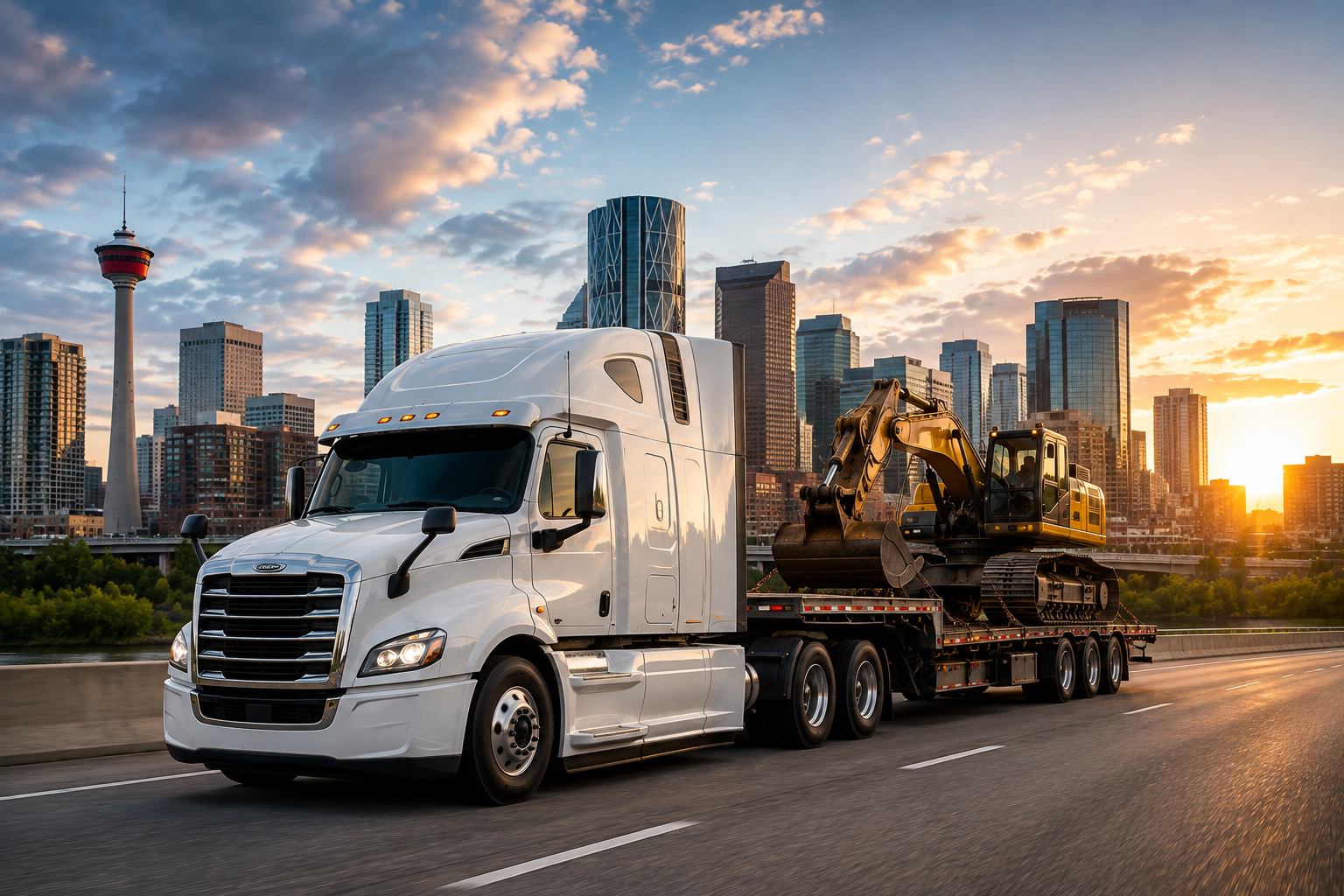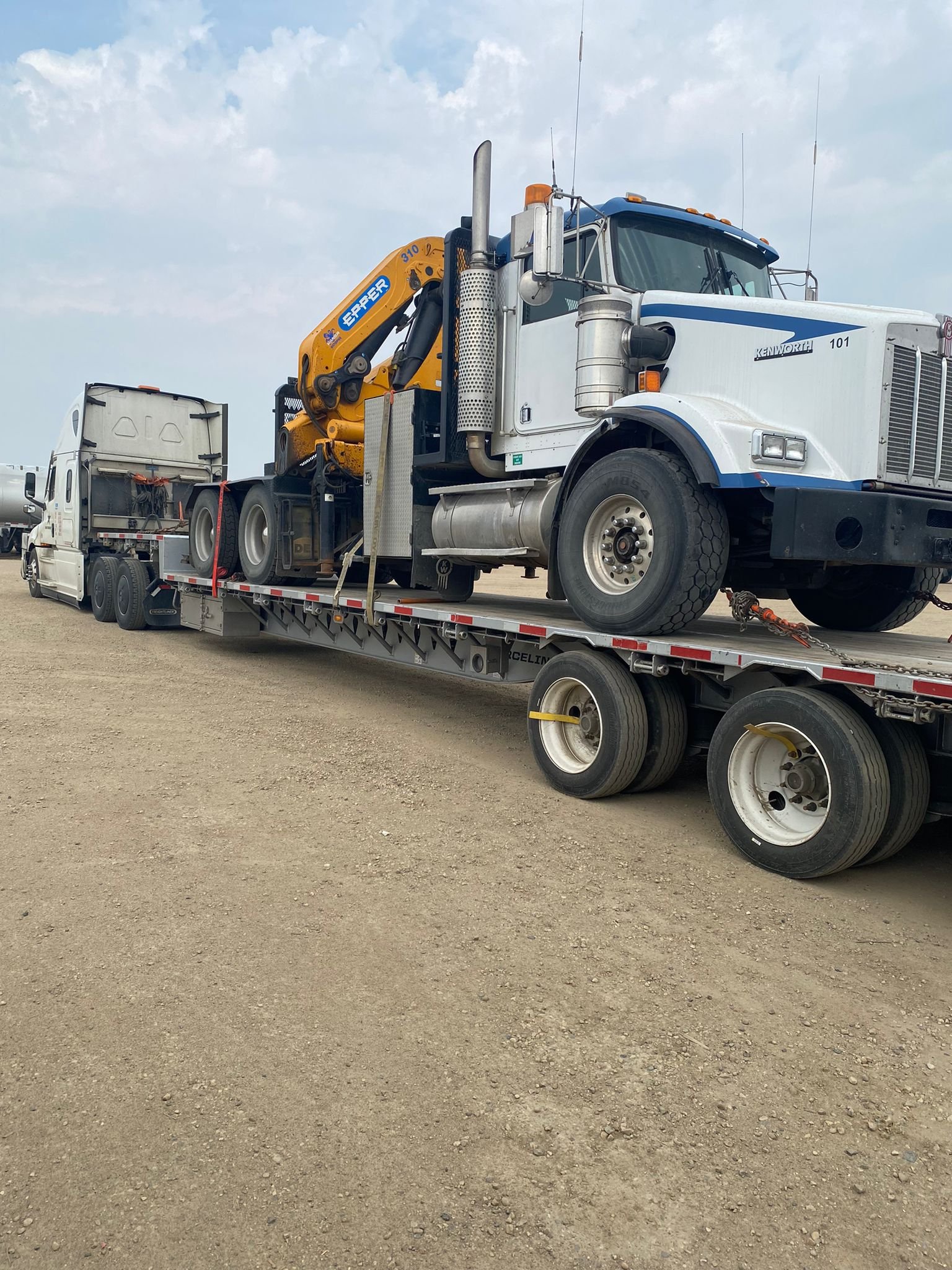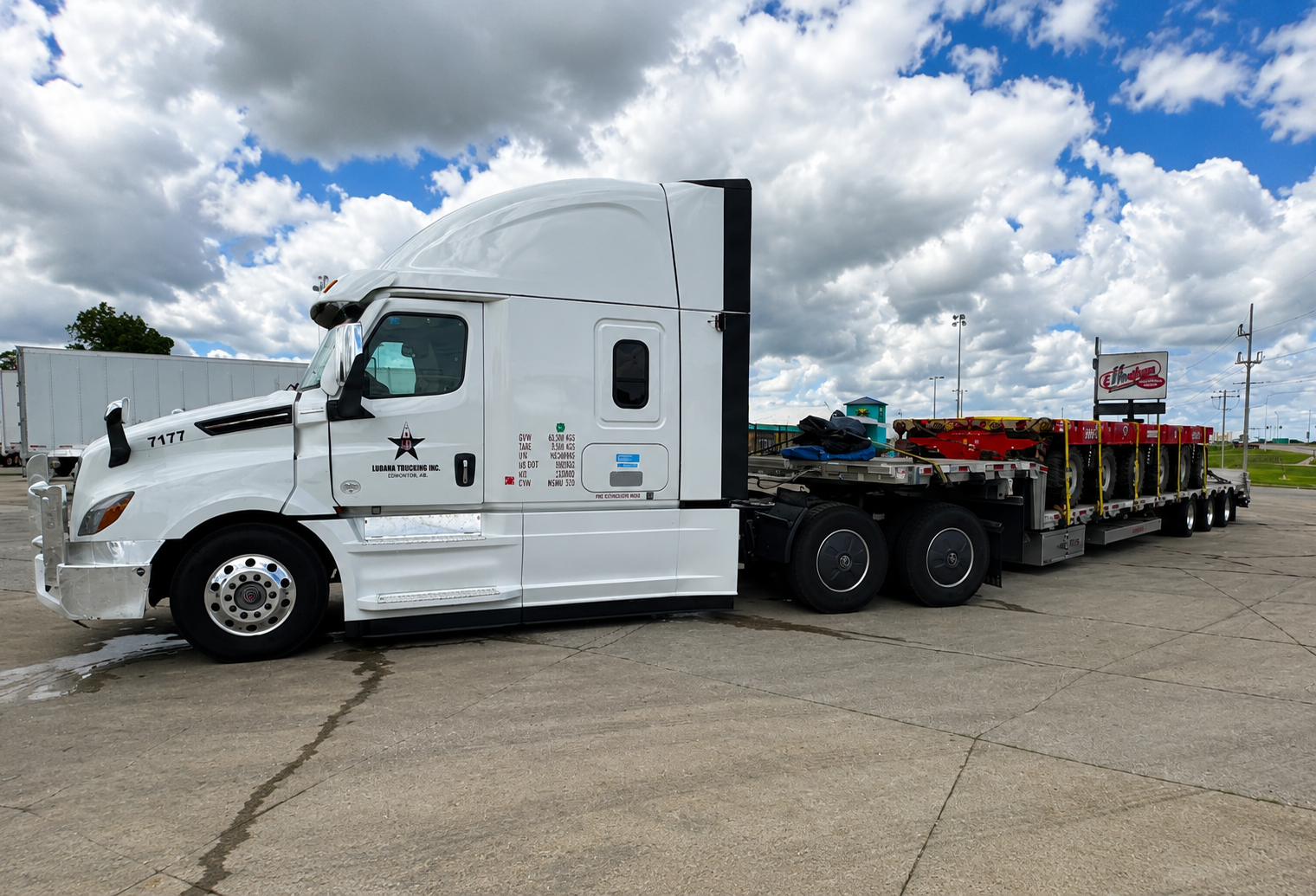
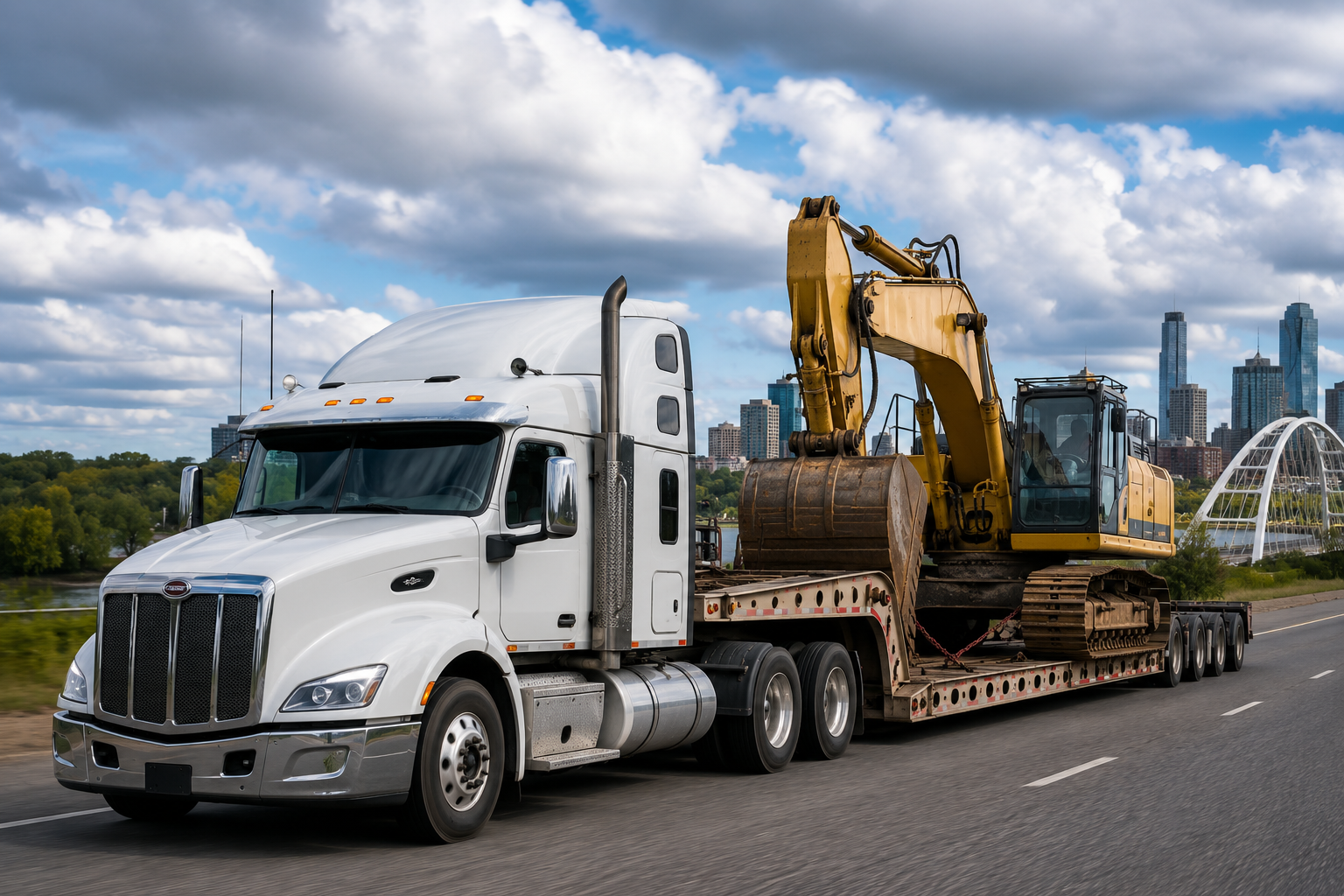

Not every shipment can be loaded onto a standard trailer and sent down the highway.
Heavy machinery, long steel products, oversized construction materials, industrial equipment, and unusual cargo can create transportation challenges that require more planning than a regular freight shipment. The equipment has to match the load, the cargo needs proper securement, and the route may require additional planning before the truck leaves the pickup location.
This is where experienced transport companies Edmonton businesses can rely on become important.
For companies operating in construction, manufacturing, energy, agriculture, industrial supply, and distribution, difficult freight is often part of normal business operations. The challenge is finding a transportation provider that understands how to move that freight safely and efficiently.
Lubana Trucking provides commercial transportation services from Edmonton to destinations across Canada and the United States, including flatbed, dry van, specialized, oversized, and cross-border transportation.
What Makes Freight Difficult to Transport?
“Difficult freight” doesn’t always mean extremely heavy freight.
A shipment can be challenging because it is:
- Too long for standard equipment
- Too wide for standard road dimensions
- Extremely heavy
- Irregularly shaped
- Difficult to load
- Sensitive to weather
- Valuable or fragile
- Required at a specific location or time
- Moving across provincial or international borders
For example, a manufacturer may need to transport a large piece of machinery from Edmonton to another province. A construction company may need structural steel delivered directly to a jobsite. An industrial supplier may need to move equipment that cannot be loaded through the rear doors of a conventional trailer.
Each shipment requires a different transportation plan.
That is why businesses should evaluate Edmonton transport companies based on their equipment, experience, service coverage, and ability to handle the specific type of freight being moved.
Heavy Freight Requires More Than a Strong Truck
Heavy freight creates several transportation considerations.
The total weight of the shipment matters, but so does how that weight is distributed across the trailer and axles. The dimensions of the cargo, its centre of gravity, loading method, and securement requirements also need to be considered.
A piece of machinery weighing several tonnes may require completely different planning from a shipment of several pallets with the same total weight.
Before dispatch, the carrier needs accurate information about the cargo.
This can include:
- Total weight
- Length
- Width
- Height
- Number of pieces
- Loading method
- Unloading method
- Pickup location
- Delivery location
- Special handling requirements
Accurate information allows a truck transport company to determine the most appropriate equipment and transportation approach.
Providing incorrect measurements can cause problems at pickup. If the actual shipment is larger or heavier than originally reported, the assigned equipment may not be suitable.
Good freight planning starts with accurate information.
Flatbed Trailers Give Difficult Freight More Flexibility
Many difficult shipments cannot be easily loaded into an enclosed trailer.
This is where flatbed trucking can provide an important advantage.
Flatbed trailers have an open deck, allowing cargo to be loaded from different directions. Depending on the shipment and facility, equipment can be loaded from the side or from above using suitable lifting equipment.
This can be particularly useful for:
- Steel beams
- Pipes
- Construction materials
- Heavy machinery
- Industrial equipment
- Large fabricated components
- Agricultural machinery
- Building materials
For businesses searching for a flatbed trucking company, equipment capability should be one of the first things to evaluate.
The carrier should understand the cargo before deciding whether a flatbed is appropriate. The size, weight, loading method, securement requirements, and destination all matter.
Long Freight Creates Different Challenges
A shipment doesn’t need to be extremely heavy to become difficult.
Length can also create transportation challenges.
Long steel products, structural components, pipes, construction materials, and fabricated equipment can extend beyond standard trailer dimensions.
When freight exceeds standard legal dimensions, additional planning may be required.
The carrier may need to consider the applicable regulations, route, permits, road conditions, and other transportation requirements before the shipment begins.
This is particularly important for businesses moving freight across multiple jurisdictions.
A route that works for a standard trailer may not be suitable for an oversized load.
The shortest route isn’t always the right route.
The transportation plan needs to account for the actual dimensions of the cargo and the equipment carrying it.
Specialized Freight Needs Specialized Planning
Some freight doesn’t fit neatly into common categories.
A shipment might be unusually shaped, difficult to secure, sensitive to weather, or require specialized loading equipment.
For this type of cargo, businesses should look for specialized freight transportation experience rather than simply choosing a carrier based on availability.
Specialized transportation can involve additional planning before pickup.
The carrier may need to understand:
- How the freight will be loaded
- Where lifting points are located
- Whether the cargo can be covered
- How the load should be secured
- What equipment is required
- Whether permits are needed
- What route should be used
- How the cargo will be unloaded
The earlier these details are understood, the easier it becomes to prevent transportation delays.
Cargo Securement Is a Critical Part of the Process
Moving difficult freight isn’t only about getting the cargo onto a trailer.
It also needs to remain secure throughout transportation.
Depending on the shipment, carriers may use chains, straps, binders, blocking, bracing, or other appropriate securement methods.
The correct securement approach depends on the type of cargo and its characteristics.
Heavy equipment may require a different setup from steel products. Long materials may need to be positioned and secured differently from machinery.
Proper load distribution is also important.
During transportation, the cargo experiences braking, acceleration, turns, road vibration, and changing road conditions. A properly planned load needs to account for these forces.
For businesses using transport companies in Edmonton, asking about experience with their specific freight type can help identify a carrier that understands these requirements.
Route Planning Becomes More Important With Oversized Freight
A normal freight shipment may follow a familiar highway route.
Difficult freight may require more detailed planning.
When cargo exceeds standard dimensions, the transportation provider may need to consider restrictions that don’t apply to ordinary loads.
Route planning can involve reviewing:
- Road restrictions
- Bridge clearances
- Weight limitations
- Construction zones
- Urban access
- Permitting requirements
- Delivery site access
- Border requirements
- Weather conditions
This is one reason experience matters when selecting Edmonton trucking companies.
A carrier that regularly handles difficult freight understands that transportation planning begins before the driver leaves the yard.
Construction Companies Depend on Reliable Freight Transportation
Construction projects regularly involve materials and equipment that aren’t suitable for standard shipping.
Structural steel, heavy equipment, building components, machinery, and other large materials may need to arrive directly at a jobsite.
A delayed shipment can affect more than transportation.
Workers may be waiting for materials. Equipment may be scheduled for installation. Contractors may have coordinated several stages of a project around a delivery.
This makes reliable construction freight transportation particularly important.
The carrier needs to understand the delivery environment.
A construction site may not have the same loading facilities as a warehouse. Access can be limited. Delivery windows may be strict. Unloading may require a crane or other equipment.
These details should be discussed before the shipment is scheduled.
Industrial Freight Requires Careful Coordination
Manufacturing and industrial businesses often move equipment, components, raw materials, and finished products between facilities.
These shipments can be large, heavy, expensive, or difficult to handle.
A truck transport company serving industrial customers needs to understand that transportation is part of a larger supply chain.
A shipment may be travelling from a supplier to a manufacturing facility, from a plant to a distribution centre, or from Edmonton to a customer in another province or country.
The transportation provider needs accurate information about the shipment and the receiving facility.
This can help avoid situations where a truck arrives with freight that cannot be unloaded because the required equipment or personnel aren’t available.
Edmonton Freight Doesn’t Always Stay in Edmonton
Businesses in Edmonton often have transportation requirements that extend far beyond Alberta.
Freight may travel to:
- Vancouver
- Calgary
- Winnipeg
- Toronto
- Montreal
- Other Canadian markets
- United States destinations
This makes long-distance transportation experience valuable.
A business may start with a local shipment and later require transportation across several provinces or into the United States.
Working with a carrier that can support multiple transportation requirements can make freight planning easier as the business grows.
For companies comparing transport companies Edmonton, service coverage should therefore be part of the evaluation.
Cross-Border Freight Adds Another Layer
Moving commercial freight between Canada and the United States requires additional coordination.
The physical transportation is only one part of the process.
Businesses also need to consider documentation, customs requirements, shipment information, and border procedures.
The carrier, shipper, consignee, and customs professionals may all have different responsibilities depending on the shipment.
Accurate information is essential.
A commercial shipment should have the appropriate documentation prepared before it reaches the border.
This becomes especially important when moving heavy or specialized freight because the transportation plan may already involve additional requirements.
An experienced ross-border trucking company can help coordinate the transportation side of the movement and communicate the information required for the shipment.
How Businesses Can Prepare Difficult Freight
Shippers can make the transportation process much easier by providing complete information before requesting a quote.
Start with the basics.
Provide the exact weight and dimensions of the shipment. Include photographs when they help explain the cargo.
Explain how the freight will be loaded.
Tell the carrier whether a crane, forklift, dock, or other equipment will be available.
Provide the exact pickup and delivery locations.
If the freight is going to a construction site, explain any access limitations.
If the shipment needs to cross the Canada-US border, mention this at the beginning.
If the freight needs weather protection, communicate that requirement before equipment is assigned.
The more information a carrier has before dispatch, the easier it is to develop an appropriate transportation plan.
What to Look for in Transport Companies Edmonton Businesses Can Trust
There are many factors to consider when selecting a transportation provider.
Price is important, but it shouldn’t be the only consideration.
Look for a company with:
- Suitable transportation equipment
- Experience with your type of freight
- Reliable communication
- Long-distance service capability
- Cross-border transportation experience when required
- Flatbed and specialized equipment where needed
- Knowledge of freight securement
- Experience with difficult loading and unloading conditions
It is also worth asking whether the carrier regularly handles the type of shipment you need to move.
A company that primarily handles standard palletized freight may not be the best choice for a large industrial machine.
The right provider should be able to understand the shipment before assigning equipment.
Why Communication Matters
Difficult freight usually requires more coordination than standard freight.
The shipper needs to know when the truck is arriving.
The driver needs accurate pickup information.
The receiving facility needs to know when the shipment is expected.
If the freight dimensions change, the carrier needs to know before pickup.
If the delivery location changes, the transportation plan may need to be adjusted.
Good communication helps keep everyone working from the same information.
For businesses that ship regularly, this becomes even more important.
A dependable transportation relationship can make recurring freight movements easier to manage and reduce unnecessary surprises.
Choosing the Right Equipment Can Prevent Delays
Many transportation problems begin with incorrect equipment selection.
For example, a shipment requiring side loading may not be practical for a standard enclosed trailer.
A large machine may need a flatbed.
A shipment that requires weather protection may need covered equipment.
A very large load may require specialized transportation planning.
This is why businesses should provide complete freight details before booking.
An experienced Edmonton trucking company can then evaluate the shipment and determine which equipment is appropriate.
The objective isn’t simply to find an available truck.
It is to find the right truck and trailer for the freight.
Difficult Freight Requires a Different Approach
Heavy, long, wide, or unusual freight requires more preparation than a standard shipment.
The right equipment needs to be selected.
The load needs to be positioned and secured properly.
The route may require additional planning.
Pickup and delivery locations need to be ready.
Cross-border shipments need accurate documentation.
Every part of the process contributes to a successful delivery.
For businesses looking for transport companies Edmonton, the best choice is a transportation provider that understands these details and can match its services to the shipment.
Lubana Trucking supports commercial freight transportation from Edmonton across Canada and the United States, with services including flatbed, dry van, specialized, oversized, and cross-border transportation.
Whether you’re moving construction materials, industrial machinery, steel, equipment, or another challenging load, the process starts with understanding exactly what needs to be moved.
When the freight is heavy, long, or specialized, proper planning can make the difference between a smooth delivery and an avoidable transportation problem.
Plan Your Next Difficult Freight Shipment
Difficult freight doesn’t have to become a difficult logistics problem.
Start with accurate cargo information. Choose equipment based on the actual shipment. Plan the route carefully. Make sure loading and unloading arrangements are ready. For cross-border freight, prepare the required information before dispatch.
Most importantly, work with a carrier that understands the type of freight you’re moving.
Lubana Trucking provides transportation solutions for businesses shipping commercial freight from Edmonton throughout Canada and the United States.
If you’re planning a shipment involving heavy equipment, long materials, oversized cargo, construction freight, or specialized industrial products, discuss your requirements with the transportation team before booking.
The right plan starts with the right information.